Morocco Heatwave July 2026: Up to 48 C, DGM Orange Alerts, and El Nino
Since the end of June 2026, Morocco has been enduring a heatwave remarkable for both its intensity and its geographical reach. From Tuesday June 30 to Sunday July 5, the Direction Generale de la Meteorologie (DGM) forecasts maximum temperatures reaching 48 C across the Souss, the South-East and the Saharan provinces, pushing several provinces to orange vigilance. This episode comes in a particular context: a summer shaped by El Nino, officially declared active over the tropical Pacific and likely to disrupt the rainfall regime of North-West Africa in the months ahead.
This article breaks down the ongoing episode, its meteorological origins, the emerging role of El Nino, the health consequences, and recommendations for travelers. For a deep dive into Morocco's historical heatwaves, see our dedicated dossier on Moroccan canicules.
The ongoing episode: temperatures, affected regions, duration
The medium-range forecast bulletins published by the DGM describe a stable hot air mass anchored over the southern part of the Kingdom and gradually creeping northward into the northern Atlantic plains and the Saiss. The distribution of expected maximum temperatures is as follows:
| Region | Expected maximum temperatures |
|---|---|
| Interior Souss, South-East, Saharan provinces | 45 C to 48 C |
| Plains of Tadla, Rhamna, interior Gharb, Saiss | 40 C to 44 C |
| Rest of the Kingdom | 34 C to 39 C |
| Atlantic and Mediterranean coasts | Milder, often under 32 C |
| Atlas reliefs | Softened by altitude |
Several phenomena accompany the heat. Over the Saharan provinces, relatively strong winds are expected and may cause local sand storms, reducing visibility and degrading air quality. On the Atlantic and Mediterranean coasts, the formation of low clouds, mist or drizzle slightly moderates temperatures but reflects the thermal contrast between the ocean and the interior. Finally, in the afternoon, thunderstorm showers are likely over the far south of the Saharan provinces and over the High Atlas reliefs, fed by daytime convective instability.
The duration of the episode — at least six consecutive days — is decisive. The DGM considers a heatwave to require temperatures above seasonal normals for at least three days; we are well beyond that threshold.
Understanding the DGM vigilance system
Morocco has operated a meteorological vigilance system since the early 2010s, modeled on Meteo-France and available on the vigilance.marocmeteo.ma portal. It relies on a four-color scale:
- Green (level 0) — No particular risk. Normal activities.
- Yellow (level 1) — Risk from occasionally threatening phenomena. Be attentive, particularly for outdoor activities.
- Orange (level 2) — Important risk of dangerous phenomena. Reinforced watch; preventive measures are required.
- Red (level 3) — Extreme risk. Absolute vigilance; authorities' instructions must be followed strictly.
The vigilance map is published daily at 8 AM and 6 PM local time and distinguishes several phenomena: heatwave, cold wave, snowfall, strong winds, heavy rain, thunderstorms, and storm surge. The July 2026 episode mainly triggers the heatwave risk at the orange level for the most exposed southern and south-eastern provinces.
A transition to the red level is not excluded if maxima durably exceed 47 C across several stations and night-time minima stay above 25 C — what meteorologists call tropical nights, particularly dangerous for the human body, which cannot recover.
Why is it so hot? The meteorological mechanisms
A typical Moroccan heatwave relies on three ingredients that combine in July 2026.
1. The Saharan thermal low. In summer, the Sahara overheats and generates a vast low-pressure zone near the ground. This low draws hot continental air northward and westward, directly over Morocco. It is the main engine of the current episode: the heat is not just a local phenomenon, it is the thermal desert advancing over the Kingdom.
2. Chergui amplification. When the easterly flow sets in, Saharan air crosses the Atlas through a foehn effect: it compresses and warms as it descends onto the Atlantic plains. This hot, dry wind, the Chergui, can push temperatures several degrees above already high expected values. It explains the 48 C peaks in the Souss.
3. Upper-level blocking high. A high-pressure system in the mid-troposphere (around 5,500 m) locks the pattern in place. Subsidence — descending air that warms by compression — prevents cloud formation and blocks the arrival of cooler Atlantic air. As long as this blocking persists, heat accumulates from one day to the next.
4. Background warming. On top of this comes climate change, which raises the thermal baseline. What would have been a 45 C heatwave forty years ago is now a 48 C heatwave, with a significantly higher probability of occurrence.
El Nino 2026: what it means for Morocco
The new element of summer 2026 is the formal declaration of El Nino over the tropical Pacific. According to the World Meteorological Organization (WMO) and NOAA's Climate Prediction Center, El Nino conditions have been present since spring and are expected to strengthen into the Northern Hemisphere winter of 2026-2027, with a probability near 80 percent for the June-August window.
Why would a Pacific phenomenon matter for Morocco? Because El Nino disrupts global atmospheric circulation. In North-West Africa, statistical correlations and teleconnection studies show a tendency toward drier-than-normal conditions during the winters that follow the emergence of a Nino episode. That is precisely the current concern: after a historically rainy 2025-2026 winter that allowed Morocco to declare its multi-year drought over (see our retrospective on winter 2025-2026), a return to rainfall deficit is feared for the 2026-2027 season.
Caution is warranted, however: the El Nino - North-West Africa teleconnection is real but moderate, and other factors (Mediterranean sea-surface temperature anomalies, the North Atlantic Oscillation) play an equal or greater role. El Nino is neither a guarantee of drought nor a direct causal explanation of the July canicule, but it is part of an unfavorable climatic backdrop worth monitoring.
Health impacts and what to do
The heatwave is no trivial matter. It poses a real health risk, especially for vulnerable populations: the elderly, young children, pregnant women, outdoor workers, people with chronic illnesses, and those with cardiac or renal conditions.
The main risks are:
- Heatstroke — A life-threatening emergency characterized by a body temperature above 40 C, hot and dry skin, confusion and even loss of consciousness. It requires an immediate emergency call.
- Heat exhaustion — Intense fatigue, headaches, nausea, cramps, heavy sweating. A precursor to heatstroke.
- Dehydration — Particularly insidious in the elderly, who no longer feel thirst.
The DGM orange level requires concrete measures:
- Drink at least 1.5 to 2 liters of water per day, even without thirst.
- Avoid going out between 11 AM and 4 PM, the hottest hours.
- Keep shutters and windows closed during the day, air out at night.
- Wear loose, light-colored clothing in natural fabrics (linen, cotton).
- Never leave anyone, especially a child, in a parked vehicle.
- Check regularly on isolated or elderly people around you.
- Cool the body: lukewarm showers, damp cloths, mist spray.
Moroccan health authorities emphasize that the excess mortality observed during previous heatwaves is largely preventable when these guidelines are followed. Under the national heatwave alert plan, monitoring cells are activated in the affected wilayas.
Travel advice: should you visit Morocco in July 2026?
The answer depends heavily on the region. Morocco is not a single climatic block, and July remains navigable if you adapt your itinerary.
Prefer:
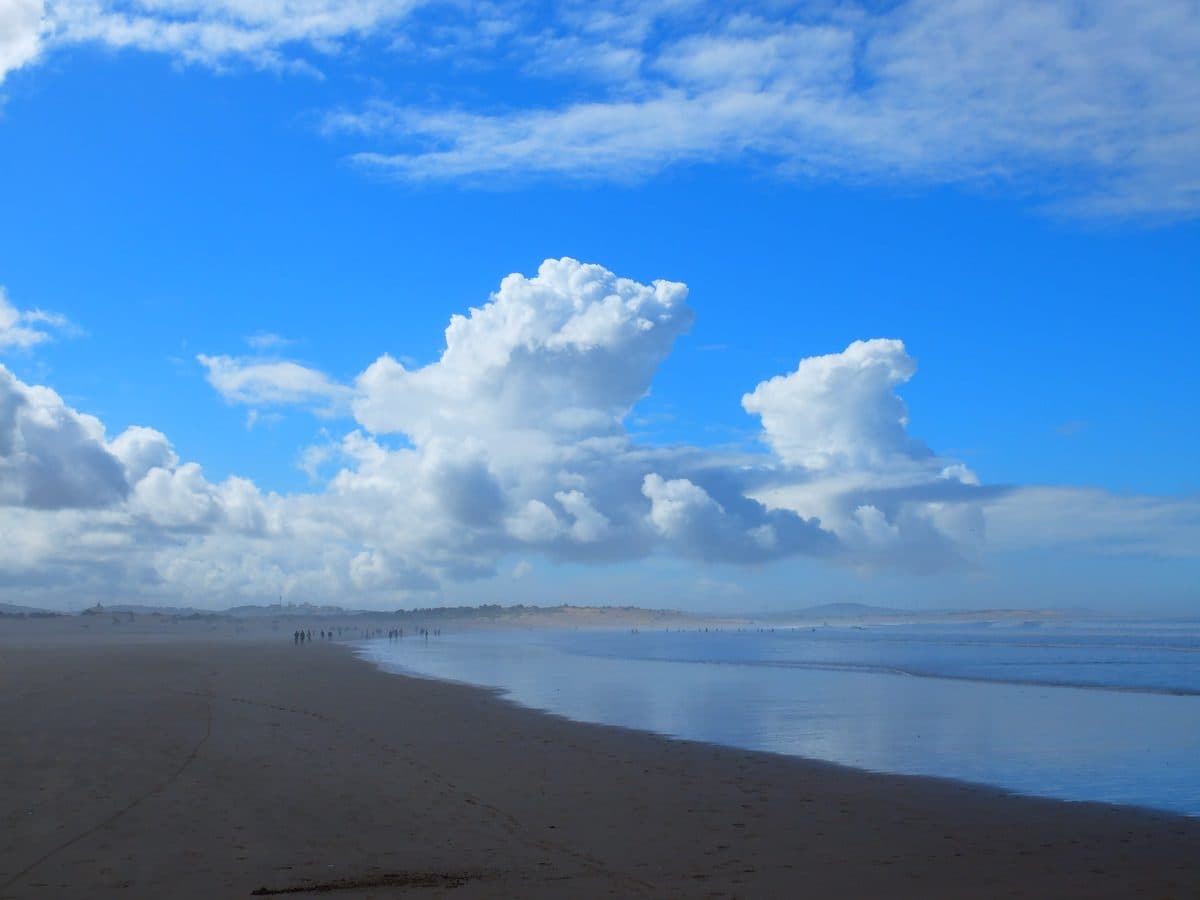
- The coasts — Essaouira, Tangier, El Jadida, Al Hoceima. The sea breeze keeps maxima under 30 C, sometimes much less (Essaouira can register 23 C on a July afternoon while Marrakech peaks at 43 C).
- The Atlas — The High Atlas valleys, Toubkal, M'Goun offer bearable day temperatures and cool nights. Ideal for hiking, provided you leave early in the morning.
- The north — Tetouan, Chefchaouen, the Mediterranean stays temperate.
Avoid or take strong precautions:
- Marrakech and the interior — See our Marrakech summer weather guide for a full overview.
- The Souss and interior Agadir — The Agadir coast stays fine, but steer clear of the interior (Taroudant, Ouarzazate) where 45 C is reached.
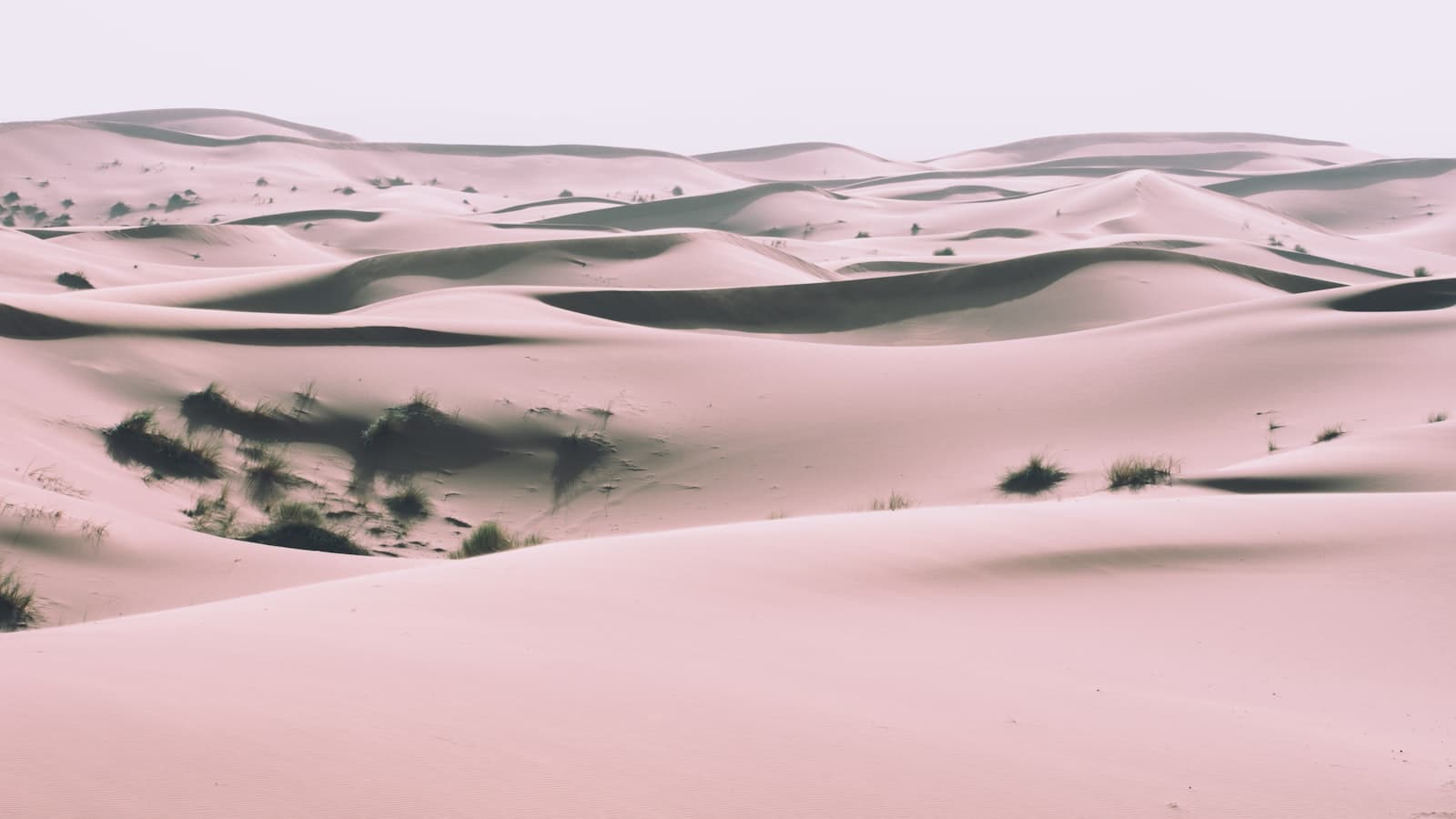
- The Sahara and southern provinces — Save them for autumn or winter. Any camel trek in high summer is out of the question.
- The interior plains — Tadla, Rhamna, Gharb, Saiss, where 40 to 44 C come with exhausting dry heat.
For a complete city-by-city calendar, see our guide to the best time to visit every major Moroccan city. In July, the basics: permanent hydration, early morning and dusk outings, hat, SPF 50+ sunscreen, sunglasses, loose but covering clothing.
In perspective: from Agadir 50.4 C (2023) to today
The July 2026 heatwave is not an isolated accident. It fits a documented trajectory of worsening thermal extremes in Morocco.
The absolute record: 50.4 C in Agadir. On August 11, 2023 at 1:33 PM, the Agadir meteorological station, in the Souss-Massa region, recorded 50.4 C — the very first time the country symbolically crossed the 50 C threshold. This national all-time record, validated by the DGM, struck a coastal city, a remarkable anomaly: the ocean proximity normally tempers extremes. The Chergui, by blocking marine influence, had allowed continental heat to reach the coast.
2024, Morocco's hottest year on record. In its annual report, the DGM confirmed that 2024 was the warmest year ever observed in the country, with an average thermal anomaly of +1.49 C relative to the 1991-2020 baseline, and peaks at 47.7 C. Globally, the WMO confirmed 2024 was the first year to exceed the +1.5 C threshold relative to the pre-industrial era.
The underlying dynamics. Morocco is warming faster than the global average. Heatwaves are lengthening, tropical nights are multiplying, records fall at short intervals. The IPCC Sixth Assessment Report classifies North Africa as a climate-change hotspot, with a projected rise in maximum temperatures above the global average.
What we are living through in July 2026 is therefore not a "new normal": it is a step in a climatic drift that, without a drastic cut in global greenhouse-gas emissions, will keep worsening. To go further, read our full analysis of past and future heatwaves in Morocco and our piece on climate change and Morocco's water future.
Conclusion
The July 2026 heatwave condenses several realities of contemporary Morocco: the brutality of thermal extremes, the maturity of the DGM alert system, and the shadow cast by El Nino over the coming agricultural season. With peaks at 48 C in the Souss and Saharan provinces, several days under orange vigilance, concrete health risks, and potential consequences for summer tourism, this episode is not a mere meteorological anecdote.
It also reminds us that Morocco sits at the crossroads of local climatic dynamics (Saharan low, Chergui, blocking highs) and global ones (El Nino, anthropogenic climate change). Individual vigilance — hydration, shifted schedules, attention to the most fragile — remains the best immediate defense. Emissions reduction and structural adaptation (resilient agriculture, air-conditioned and greened urban planning, water management) are the only long-term answers.
To track alerts in real time, check the DGM vigilance map daily. To plan a trip with climate constraints in mind, refer to our seasonal and city-by-city guides.