Marrakech in Summer: Temperatures, Heat & What to Expect
Marrakech in summer is an experience of extremes. The ochre walls absorb heat all day and radiate it back through the night. Djemaa el-Fna square shimmers in the midday haze. And yet, this is also when the city is at its most Moroccan — the souks filled with locals doing their daily shopping before dawn, the gardens irrigated and green, the evenings electric.
Understanding the weather in Marrakech in summer is not about whether to go — it's about how.
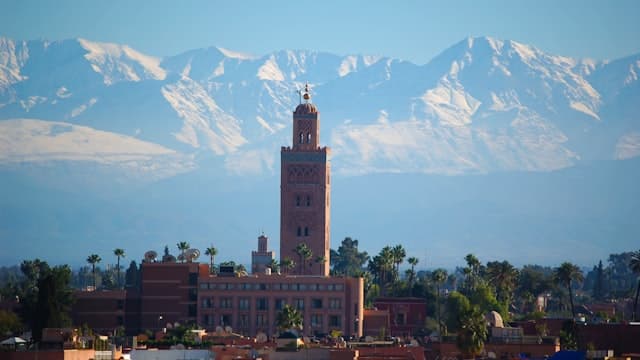
Marrakech sits at 466 metres above sea level in the Haouz plain, surrounded by mountains. Its distance from the Atlantic coast (roughly 200 km east of Essaouira) means it receives no cooling sea breeze. This is why summer temperatures are so extreme compared to coastal Morocco.
Monthly Temperatures in Marrakech
| Month | Avg Min (°C) | Avg Max (°C) | Record High (°C) | Rainfall (mm) |
|---|---|---|---|---|
| May | 16 | 33 | 44 | 10 |
| June | 20 | 38 | 46 | 4 |
| July | 23 | 41 | 49.6 | 2 |
| August | 23 | 40 | 48 | 3 |
| September | 20 | 35 | 44 | 7 |
| October | 15 | 29 | 37 | 20 |
The 2024 record of 49.6 °C — recorded on July 16, 2024 — was one of the highest temperatures ever reliably measured in Morocco. It was driven by a Chergui event (desert wind from the south-east) coinciding with a large-scale heat dome over North Africa.
In July and August, minimum temperatures rarely drop below 23 °C at night. This means there is no overnight cooling. Plan indoor air-conditioned rest periods during the day — your body cannot recover from heat stress without a cool break.
Marrakech vs. the Coast: A Temperature Comparison
| City | July Avg Max | August Avg Max | Distance from Essaouira |
|---|---|---|---|
| Marrakech | 41 °C | 40 °C | ~200 km east |
| Essaouira | 24 °C | 24 °C | On the coast |
| Agadir | 26 °C | 27 °C | On the coast |
| Casablanca | 27 °C | 28 °C | On the coast |
The 17 °C difference between Marrakech and Essaouira in July — both in the same region of Morocco — illustrates the extraordinary cooling effect of the Atlantic.
When to Visit Marrakech
The ideal seasons for Marrakech are March–April (spring: 25–30 °C, everything in bloom) and October–November (autumn: 25–30 °C, post-summer calm). These windows offer comfortable temperatures for full days of exploration.
For summer visits, the best strategy is:
- Arrive in June (before the peak July–August heat)
- Or visit in September, when temperatures begin to drop towards 35 °C and tourist crowds thin out
How to Survive the Heat in Marrakech
Timing Is Everything
| Time of Day | Activity |
|---|---|
| 6:00 – 10:00 AM | Explore the medina, Djemaa el-Fna, souks |
| 10:00 AM – 4:00 PM | Stay in riad courtyard or air-conditioned café/museum |
| 4:00 – 6:00 PM | Gardens (Majorelle, Menara) in the late afternoon light |
| 6:00 PM – midnight | Dinner, evening souk, rooftop bars |
The morning hours in Marrakech's medina are simply magical — the light is golden, the streets are quiet, and the heat hasn't yet built. This is when the city belongs to you.
Where to Cool Down
- Traditional riads: Riad courtyards maintain natural temperatures of 22–25 °C even during peak heat, thanks to thick earthen walls and central fountain evaporative cooling
- Musée de Marrakech / Musée Yves Saint Laurent: Air-conditioned and world-class
- Hammam: A traditional steam bath might seem counterintuitive, but finishing with a cool rinse lowers body temperature dramatically
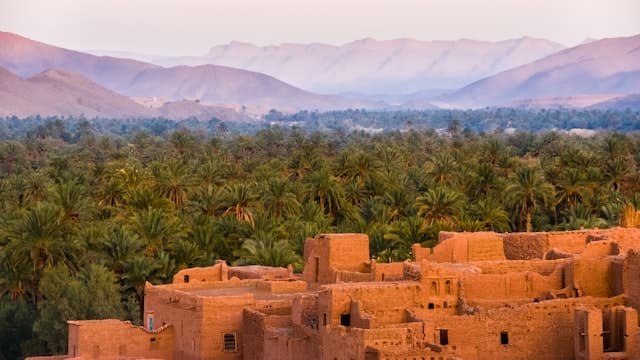
- Palmeraie: The palm grove north of the city is several degrees cooler than the medina
Hydration
- Carry 1.5 litres of water minimum whenever you go out, even for a short walk
- Fresh-squeezed orange juice stalls are on every street corner — 10–15 MAD for a large glass
- Avoid alcohol during daytime heat — it accelerates dehydration
- Look for shade and rest every 30–45 minutes in direct sun
Sun Protection
Marrakech sees a UV index of 11 (Extreme) from June through August. See our UV Index Guide.
- SPF 50+ applied before going outdoors and every 90 minutes
- Wide-brimmed hat and loose light-coloured clothing
- Sunglasses — always
What to Wear
Light, breathable, loose-fitting clothing in light colours is both practical and culturally appropriate in Marrakech's medina. Think linen or cotton. Avoid dark colours which absorb heat.
Women: A light scarf to cover shoulders when entering mosques or more conservative neighbourhoods is both polite and provides extra sun protection.
Getting There: Avoid Peak Hours
If flying in, try to arrive in the early morning or late evening to avoid the worst heat during the airport–hotel transfer. The 20-minute taxi ride from Marrakech Menara airport to the medina at 2 PM in July is genuinely exhausting.
Check the Live Forecast
Marrakech's weather can vary — some days in summer see unexpected cloud cover or the occasional thunderstorm that drops temperatures by 8–10 °C. Always check before planning an outdoor activity.
Live weather in Marrakech — updated every hour.
Conclusion
Summer in Marrakech demands respect for the heat. But it also rewards those who adapt: cool pink dawns over the medina, mint tea under a riad's shaded courtyard, the Djemaa el-Fna coming alive at sunset when the heat finally relents. Visit smart, and Marrakech in summer is unforgettable.
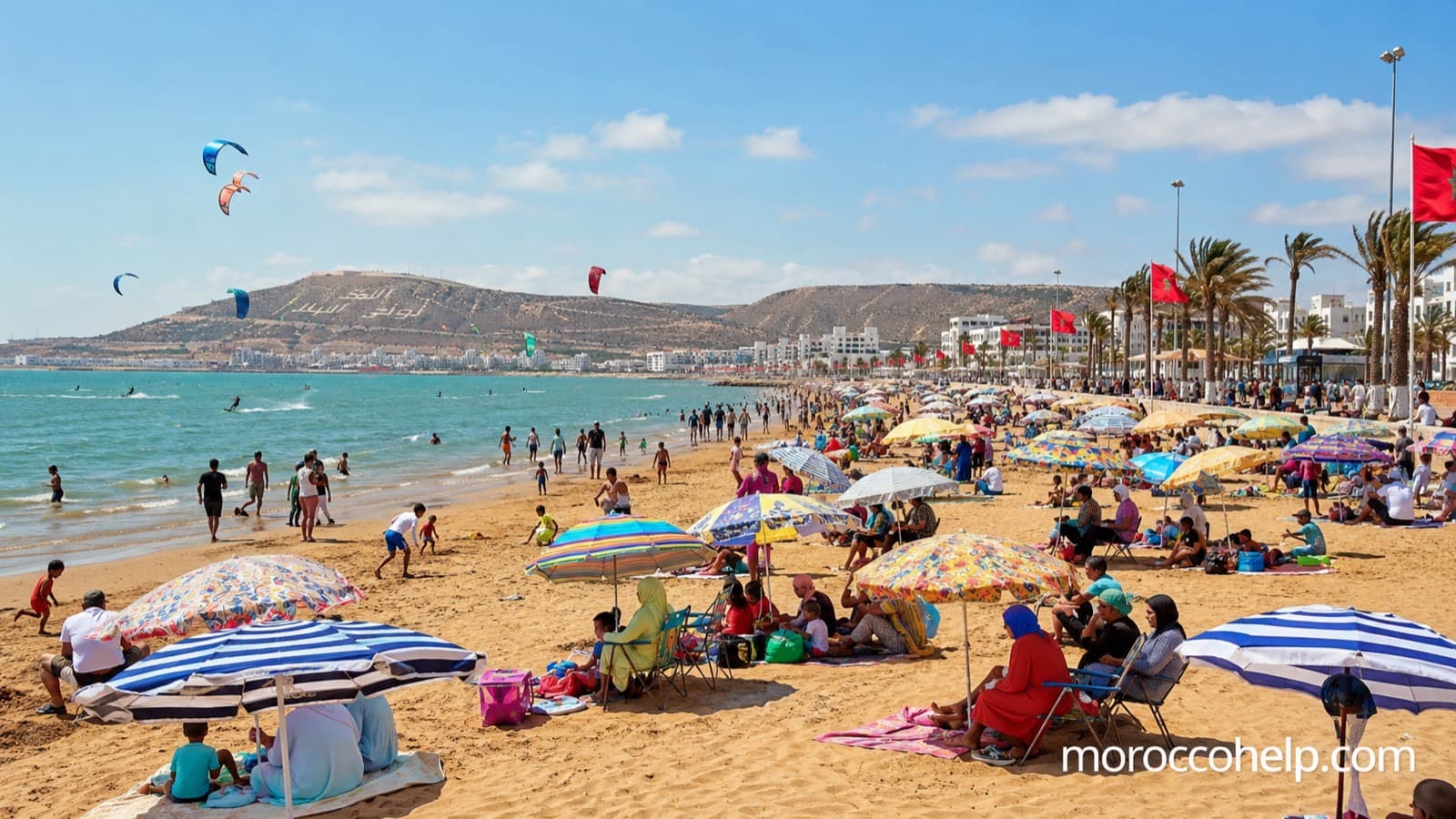
For planning your trip, see also our Best Beaches Morocco Summer guide — many visitors combine a few days in Marrakech with a coastal escape to Essaouira or Agadir.