The Chergui: Morocco's Scorching Desert Wind
Every summer, and sometimes well into spring and autumn, Morocco experiences one of its most dramatic weather phenomena: the Chergui. This hot, dry wind sweeps in from the east, carrying Saharan air over the Atlas Mountains and onto the plains and cities of western Morocco. In a matter of hours, temperatures can spike by 15 C or more, humidity can plummet to single digits, and the air takes on a thick, dusty haze that obscures the sky. The Chergui is more than a meteorological curiosity. It is a defining feature of Moroccan life, shaping agriculture, health, daily routines, and even architecture.
What Is the Chergui?
The name "Chergui" comes from the Arabic word for "east," reflecting the wind's origin. In meteorological terms, the Chergui is a foehn-type wind, meaning it gains heat and loses moisture as it descends from high terrain. But its ultimate source is the Sahara Desert, making it a hybrid phenomenon: part desert wind, part mountain wind.
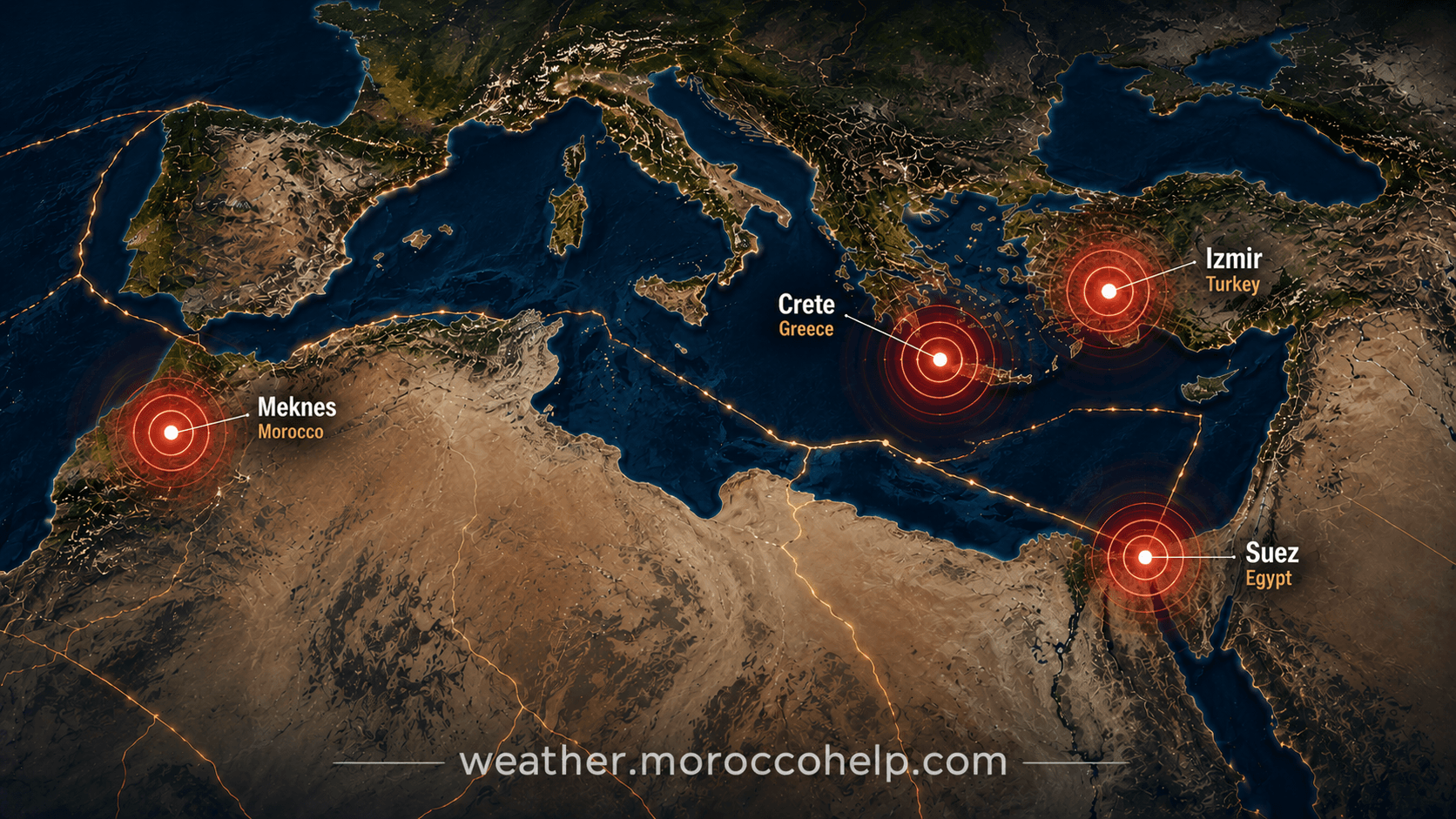
The Chergui is Morocco's version of a family of hot winds that affect the entire Mediterranean basin. Italians know the Sirocco, Spaniards dread the Levante, and Egyptians contend with the Khamsin. While these winds share a common ancestry in Saharan heat, each has distinct characteristics shaped by local geography.
The Mechanism: How the Chergui Forms
Understanding the Chergui requires understanding the atmospheric dynamics that drive it.
Step 1: Saharan Heat Builds
The process begins in the Sahara, where intense solar radiation heats the ground surface to temperatures exceeding 70 C. The air above this superheated surface becomes extremely hot and dry, forming a deep thermal low-pressure zone. During the summer months, this thermal low is semi-permanent, but it intensifies during heatwave events.
Step 2: Pressure Gradient Drives the Flow
When a high-pressure system establishes itself over the western Mediterranean or the Azores, a steep pressure gradient forms between the Saharan low and the Atlantic or Mediterranean high. This gradient drives air from the southeast and east, channeling it toward Morocco.
Step 3: The Atlas Rain Shadow
Here is where the Chergui acquires its most extreme characteristics. As the hot, dry air encounters the Atlas Mountains, it is forced upward over the barrier. If any residual moisture remains, it is wrung out as sparse precipitation on the eastern (windward) slopes. As the air descends on the western (leeward) side, it compresses and heats further through a process called adiabatic warming. For every 1,000 meters of descent, the air warms by approximately 10 C under dry adiabatic conditions.
The High Atlas, with passes exceeding 2,000 meters and peaks above 4,000 meters, provides an enormous elevation drop for this descending air. By the time it reaches the Haouz plain around Marrakech, the air has been superheated twice: once by the Sahara, once by adiabatic compression. The result is an air mass with temperatures that can reach 48 C or higher and relative humidity below 5%.
Step 4: Dust Entrainment
The Chergui typically carries significant amounts of Saharan dust. Fine particles of quartz, feldspar, and clay minerals are lofted into the atmosphere at the source region and transported westward. During strong events, this dust can reduce visibility to less than one kilometer and coat every surface with a fine orange-brown film. Satellite imagery during major Chergui events shows a dense plume of dust extending from the Sahara across Morocco and sometimes continuing over the Atlantic Ocean.
Chergui vs. Sirocco: What Is the Difference?
The terms Chergui and Sirocco are often used interchangeably, but they are not identical.
Sirocco
- Origin: The Sirocco is a broad term for any hot southerly or southeasterly wind originating from the Sahara that affects the Mediterranean basin.
- Geography: It is used most commonly in Italy, Malta, and the central Mediterranean. When it crosses the Mediterranean Sea, the Sirocco picks up moisture, arriving in southern Europe as a warm, humid wind that can bring dust-laden rain, known as "blood rain."
- Characteristics: Warm and often humid by the time it reaches European shores.
Chergui
- Origin: Specifically Moroccan, referring to the easterly wind that crosses the Atlas and descends onto the Atlantic-facing slopes.
- Geography: Affects mainly Morocco, particularly the Haouz plain, the Souss valley, and the Atlantic coast.
- Characteristics: Extremely hot and dry, thanks to the double heating effect of Saharan origin and foehn descent. The Chergui does not cross a significant body of water before reaching its target, so it retains its extreme aridity.
In practical terms, the Chergui is hotter and drier than the Sirocco as experienced in Europe. It is closer to the Egyptian Khamsin in character, though shaped by Morocco's unique Atlas geography.
Temperature Records and Extremes
The Chergui is responsible for many of Morocco's most extreme temperature records.
- Agadir: During the August 2023 heatwave driven by a prolonged Chergui event, Agadir recorded 50.4 C, an unprecedented temperature for the city and one of the highest ever documented in Morocco.
- Marrakech: Summer Chergui events routinely push temperatures to 46 C to 48 C, well above the city's already hot summer average.
- Casablanca: Even this Atlantic coastal city, normally moderated by sea breezes, can see temperatures spike to 40 C or above during strong Chergui events, as the desert air overwhelms the oceanic influence.
- Fes: The inland basin of Fes, already prone to summer heat, becomes an oven during Chergui episodes, with temperatures regularly reaching 44 C to 46 C.
The speed of the temperature change is often as dangerous as the absolute heat. A city experiencing a pleasant 28 C morning can be at 42 C by early afternoon when the Chergui arrives, leaving insufficient time for people and systems to adapt.
Duration and Frequency
Chergui events vary widely in duration and intensity.
- Typical duration: Two to five days, though some events persist for a week or more.
- Frequency: In an average year, Morocco experiences 10 to 20 significant Chergui events. They are most common from June to September but can occur in any month. Spring Chergui events (April to May) are particularly disruptive because they strike when the population has not yet acclimatized to heat.
- Interannual variability: Some years see relatively few intense events, while others, such as 2023 and 2024, experienced extended periods of Chergui influence that contributed to record-breaking national temperatures.
Health Impacts
The Chergui poses significant health risks, particularly for vulnerable populations.
Heat-Related Illness
- Heat exhaustion and heatstroke: The combination of extreme temperatures and very low humidity creates dangerous conditions. While low humidity reduces the heat index compared to tropical environments, it accelerates dehydration. People may not realize how much fluid they are losing because sweat evaporates almost instantly.
- Cardiovascular stress: The sudden temperature rise increases the burden on the cardiovascular system. Hospital admissions for heart attacks and strokes rise measurably during Chergui events.
Respiratory Effects
- Dust exposure: The fine Saharan dust carried by the Chergui contains particles small enough (PM2.5 and PM10) to penetrate deep into the lungs. Studies have shown elevated rates of asthma attacks, bronchitis exacerbations, and respiratory hospital admissions during dust-laden Chergui events.
- Allergenic compounds: Desert dust can carry fungal spores, pollen, and even microbial organisms from the Sahara. These biological hitchhikers can trigger allergic reactions in sensitive individuals.
Psychological Effects
Moroccans have long recognized that the Chergui affects mood and behavior. Traditional wisdom holds that the wind "drives people mad," and there is scientific support for this folk observation. Hot, dry winds in various parts of the world have been associated with increased irritability, anxiety, insomnia, and even higher rates of violent crime. The rapid environmental change, extreme discomfort, and disrupted sleep likely all contribute.
Impact on Agriculture and Daily Life
Agriculture
- Crop damage: The Chergui can desiccate crops within hours. Cereal fields nearing harvest are particularly vulnerable, as the hot, dry air shatters grain heads and reduces yields. Olive trees suffer leaf scorch, and citrus groves can lose immature fruit to heat stress.
- Livestock: Animals suffer from heat stress and dehydration. Dairy production drops sharply during events. Pastoralists in the steppe and pre-Saharan zones move livestock to shaded areas and increase watering frequency.
- Soil: The dry wind accelerates soil moisture loss and can trigger wind erosion, carrying away topsoil from recently plowed fields.
Daily Life
- Energy demand: Air conditioning usage spikes during Chergui events, straining the electrical grid. Morocco has experienced localized power outages during peak demand on extreme heat days.
- Water consumption: Household and agricultural water demand surges, exacerbating pressure on already stressed water resources.
- Outdoor activity: Construction work, agricultural labor, and outdoor tourism come to a near halt during the worst events. Local authorities sometimes issue heat warnings advising people to stay indoors during peak hours.
Adaptation and Coping Strategies
Moroccans have developed centuries of cultural and architectural adaptations to cope with the Chergui.
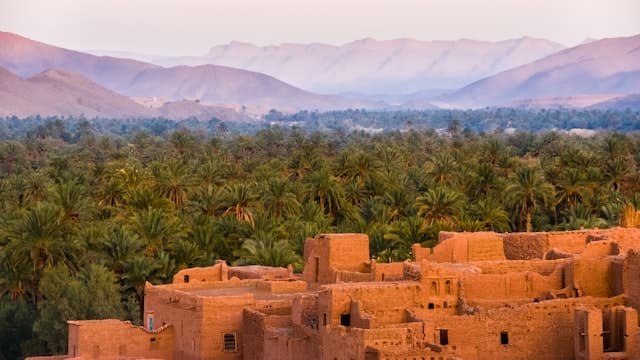
- Traditional architecture: The thick mud-brick walls of kasbahs and riads provide excellent thermal mass, absorbing heat during the day and slowly releasing it at night. Interior courtyards with fountains add evaporative cooling.
- Daily rhythms: During Chergui events, many Moroccans shift their schedules, rising early, resting during the hottest hours, and resuming activity in the evening.
- Dietary adjustments: Cold soups, salads, mint tea, and fresh fruit consumption increases. Heavy meals are avoided during peak heat.
- Modern measures: The Moroccan government's Direction Generale de la Meteorologie (DGM) issues orange and red alerts during severe Chergui events, triggering public health advisories and emergency cooling centers in urban areas.
The Chergui in a Changing Climate
Climate models project that Chergui events will become more frequent and more intense as global temperatures rise. The thermal low over the Sahara is expected to deepen, the Azores High may shift its position, and the overall warming trend means that each Chergui event starts from a higher baseline temperature. The 2023 and 2024 heatwaves, both amplified by Chergui winds, may be a preview of the new normal.
For Morocco, this means that adaptation strategies developed over centuries will need to be supplemented with modern approaches: improved building insulation, expanded cooling infrastructure, upgraded health response systems, and more drought-resistant agricultural practices.
Conclusion
The Chergui is woven into the fabric of Moroccan life. It is feared, respected, and endured. Understanding its mechanism, from the Saharan heat engine to the Atlas foehn effect, helps explain why this wind can turn a pleasant day into a health emergency. For travelers, the practical advice is straightforward: monitor forecasts, carry water, seek shade, and respect the power of a wind that has shaped this country's culture, architecture, and agriculture for thousands of years.