Morocco Storm Alerts October 2026: Repeated DGM Orange Warnings, Hail and 20-40 mm Rain
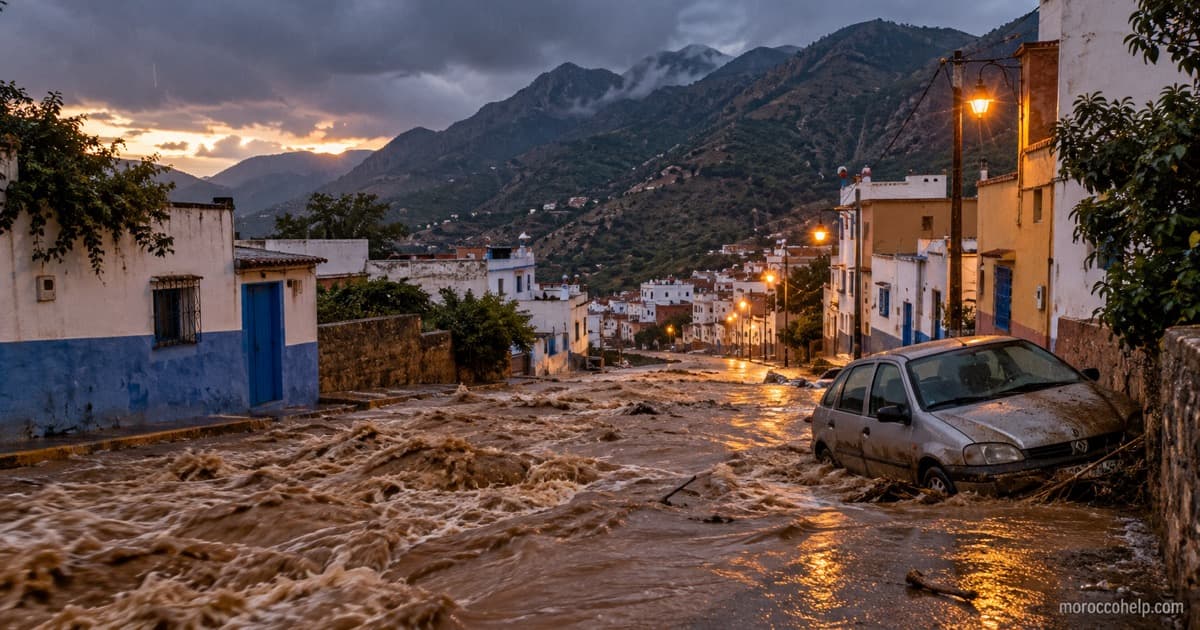
October 2026 has been a stormy autumn month in Morocco. Since the first week of the month, the Direction Generale de la Meteorologie (DGM) has issued one orange vigilance after another: 23 provinces on October 8, 26 provinces on Sunday October 11, and a new alert issued October 17 for the weekend of October 18-19, with 20 to 40 mm of rain, hail and strong wind gusts. These episodes mark the true opening of the rainy season, and they have had real consequences: flash floods in Imzouren on October 6 and 19 road sections cut by floods between October 6 and 10.
The situation in one paragraph
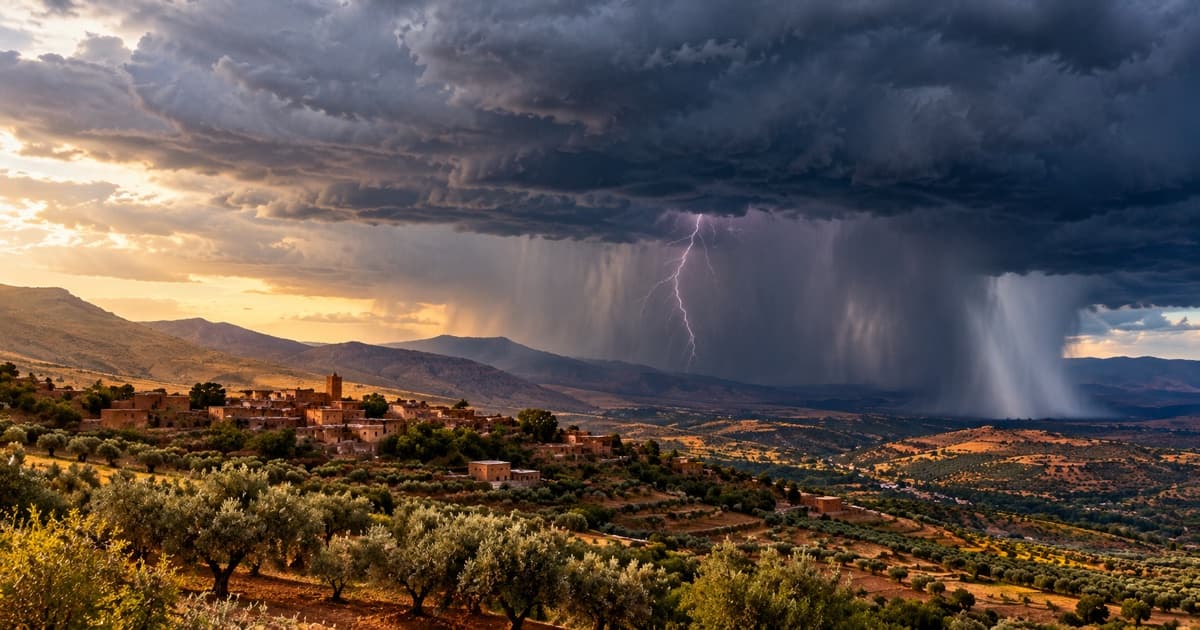
An unstable westerly flow settled over Morocco in the first week of October, feeding sometimes violent thunderstorms over the Rif, the Middle Atlas, the High Atlas and the interior plateaus. Each new disturbance has brought its own orange alert: storms with hail and gusts, rainfall totals of 20 to 40 mm in a few hours, and warning windows typically running from early afternoon to midnight. Flash flooding remains the main danger — far more than the rain itself.
Timeline of the October 2026 alerts
| Date | Episode | Details |
|---|---|---|
| Oct 6-7 | First violent storms | Flash floods in Imzouren (Al Hoceima) on the evening of the 6th; first orange alert on Wednesday the 7th for storms, hail and gusts. |
| Oct 8 | Orange alert, 23 provinces | Storms with 20 to 30 mm of rain over the alerted provinces. |
| Oct 11 | Orange alert, 26 provinces | Storms from 13:00 to 23:00, 25 to 40 mm cumulative rain, hail and gusts (full list below). |
| Oct 12-16 | Unstable weather persists | Disturbed conditions reported over several regions; gradual normalisation but saturated soils. |
| Oct 17-19 | New orange alert | Saturday 18 (14:00-midnight): 7 provinces, 20-30 mm. Sunday 19 (10:00-midnight): 12 provinces, 20-40 mm, possible hail. |
No official casualty or damage figures have been published for this sequence, but the road bulletins of the Ministry of Equipment and Water confirm the scale of the material impacts.
The 26 provinces of the October 11 alert
The list published by state agency MAP on Sunday October 11 covered a broad interior crescent from the northeast to the High Atlas, sparing the big coastal cities (Casablanca, Rabat, Tangier and Agadir were not included):
- North and East: Al Hoceima, Taza, Taounate, Guercif, Figuig
- Fes-Meknes: Fes, Moulay Yaacoub, Sefrou, Meknes, El Hajeb, Ifrane, Khemisset, Sidi Kacem, Sidi Slimane
- Middle Atlas and foothills: Beni Mellal, Azilal, Khenifra, Boulemane, Midelt
- Centre and Atlas: Fquih Ben Salah, Settat, Khouribga, El Kelaa des Sraghna, Errachidia, Tinghir
For the weekend of October 18-19, the DGM's new alert targets Saturday Azilal, Oujda-Angad, Jerada, Taourirt, Guercif, Beni Mellal and Taza (20 to 30 mm), then on Sunday a wider group: Zagora, Figuig, Azilal, Errachidia, Midelt, Boulemane, Chefchaouen, Fahs-Anjra, M'diq-Fnideq, Tinghir, Al Haouz and Tetouan (20 to 40 mm, hail and gusts possible).
Roads cut: the situation in the Atlas
Between October 6 and 10, the Ministry of Equipment and Water counted 19 road sections cut by floods. By the evening of October 10, 14 had reopened (including five national, four regional and five provincial roads), but five remained impassable, with no local detour possible:
| Road | Section | Province |
|---|---|---|
| N7 | Tahanaout - Asni | Al Haouz |
| P2030 | Asni - Imlil | Al Haouz |
| R106 | near Ait Abdellah | Taroudant |
| R116 | near Taghmout | Taroudant |
| R504 | Ribat El Kheir - Bouiblane | Sefrou |
Al Haouz, the mountain province south of Marrakech still rebuilding from the September 2023 earthquake, has drawn the most attention: the road to Imlil, the classic base for Toubkal treks, was cut at two points, severing the standard route from Marrakech. If you are planning a hiking trip, read our Atlas Mountains weather guide and check road conditions before leaving — tour operators may reroute or cancel mountain excursions while the alert lasts.
Why is autumn so stormy in Morocco?
The pattern is a classic feature of the transition into the rainy season:
- Warm ground, arriving disturbances. In October, land and sea are still warm while the first Atlantic disturbances of autumn push in from the west. Cold air aloft rides over a mild, humid air mass — the perfect recipe for vigorous thunderstorms.
- Mountains as amplifiers. The Rif, Middle Atlas and High Atlas force humid air to rise (orographic lift), triggering and strengthening storm cells — which is why the alerts concentrate on mountain provinces and their foothills.
- Hail and gusts. Inside these deep cells, hail forms at high altitude and sometimes reaches the plains, while storm downdrafts produce violent gusts at ground level.
Understanding the DGM vigilance system
The DGM uses a four-colour alert scale, updated several times a day:
- Green: no particular vigilance.
- Yellow: phenomenon usual for the region but locally dangerous (be aware).
- Orange: dangerous phenomenon of strong intensity — be very vigilant, follow bulletins and limit exposed activities.
- Red: exceptional phenomenon of very strong intensity — strict safety instructions.
All the October alerts described here are orange, the second level of the scale.
The right reflexes during a storm alert
- Driving: slow down in downpours, avoid narrow valleys and never cross a flooded road — a few dozen centimetres of water can sweep a car away.
- In the mountains: storms break mostly in the afternoon; start early, be back before 13:00, and cancel if an alert covers your area (see our flash floods in Morocco guide).
- In town on foot: stay away from wadis and underpasses at the first rumble of thunder; hail can injure and gusts send objects and sheet metal flying.
- At home or on the farm: secure anything that can fly (dishes, tarps, greenhouse film), watch low-lying spots and never step into a flooding wadi to save equipment.
FAQ
What does an orange alert mean in Morocco?
It is the second of four levels on the DGM vigilance scale: a dangerous weather phenomenon of strong intensity is expected in the listed provinces, during the time windows given in the bulletin.
Which cities were under the October 11 alert?
Fes, Meknes, Ifrane, Beni Mellal, Taza, Settat, Al Hoceima and about twenty other interior and mountain provinces. Casablanca, Rabat, Marrakech and Agadir were not on the list.
Can I still reach Imlil from Marrakech?
As of October 10, the Tahanaout-Asni (N7) and Asni-Imlil (P2030) roads were closed with no local detour possible. Check the Ministry of Equipment's road bulletin before any departure toward Toubkal.
How long will the stormy weather last?
The weekend alert covers Saturday from 14:00 to midnight and Sunday from 10:00 to midnight. Moroccan media have reported that unstable weather could persist in several regions until the end of the following week.
Are these rains good for Morocco's dams?
On balance, yes: every autumn episode helps refill the basins before winter, after the excellent 2025-2026 water year described in our August dams update. But rain that is too violent on dry soil runs off rather than soaking in.