Morocco Heatwave August 2026: Forecast, Hottest Regions & How to Stay Safe
If July 2026 felt brutal, brace yourself: August is statistically the hottest month of the year in Morocco. After an already punishing summer that pushed the Direction Generale de la Meteorologie (DGM) to orange vigilance with peaks near 48 C, August threatens to extend the ordeal. Rather than wait for the next alert, this guide prepares you in advance - the expected temperatures, the regions most at risk, the meteorological mechanisms at work, and the concrete steps to protect yourself.
For the broader history of Moroccan heatwaves, see our complete heatwave dossier, and for the episode that just ended, our July 2026 heatwave analysis.
Why August is Morocco's hottest month
Solar logic is relentless: even though the summer solstice falls in June, the land and ocean continue to store heat for weeks afterward. Across Morocco, the absolute maximum temperatures of the year are almost always recorded between late July and mid-August, not in June. Long-term averages put daytime highs at roughly 36 C nationally in August, but that average hides extreme disparities - interior cities routinely exceed 42 C, and heatwave spikes reach 44-48 C.
Morocco now experiences on average about 20 heatwave days per year, and that figure is climbing as the climate warms. The country is heating faster than the global average: 2024 was the warmest year ever recorded in Morocco, with a thermal anomaly of +1.49 C above the 1991-2020 baseline. In that context, an intense August 2026 is not a surprise - it is the new baseline.
What to expect in August 2026
Heat in Morocco is not uniform. The atlas mountain range, the ocean and the latitude create stark contrasts over a few hundred kilometres. A realistic August breakdown:
| Region | Typical August maxima | During a heatwave spike |
|---|---|---|
| Southern and Saharan provinces (Smara, Assa-Zag, Oued Ed-Dahab) | 42-45 C | 46-48 C |
| Interior plains (Marrakech, Fes, Tadla, Rhamna) | 38-42 C | 43-46 C |
| Atlantic coast (Casablanca, Essaouira) | 26-30 C | 32-35 C |
| Mediterranean north (Tangier, Tetouan) | 30-33 C | 35-38 C |
| Atlas reliefs (Oukaimeden, Michlifen) | 22-28 C | softened by altitude |
Two details matter as much as the peak number. First, night-time minima: in the interior and the south they often stay above 25 C - the famous tropical nights during which the human body cannot cool down and recover. Second, duration: the DGM defines a heatwave as at least three days above seasonal normals, but August episodes frequently last six to ten days, compounding health risk.
The Chergui: when the desert wind turns up the heat
The single biggest amplifier of Moroccan heatwaves is the Chergui, a hot, dry easterly wind that sweeps Saharan air across the atlas through a foehn effect. As the air descends onto the Atlantic plains and the Souss, it compresses and warms, pushing temperatures several degrees above the already-high forecast. The Chergui is also what allows extreme heat to reach the coast - it was a key factor in Agadir hitting a national record of 50.4 C on 11 August 2023, the first time Morocco crossed the 50 C threshold.
When the DGM announces an easterly flow alongside high temperatures, expect the felt heat to jump sharply and humidity to collapse. Read our dedicated Chergui wind guide to understand the mechanism in detail.
Health risks and how to stay safe
Extreme heat is a genuine medical hazard, not an inconvenience. The people most at risk are the elderly, young children, pregnant women, outdoor workers, and anyone with chronic cardiac, respiratory or renal conditions.
Heatstroke is a life-threatening emergency. Symptoms include a body temperature above 40 C, hot dry skin, confusion and loss of consciousness. Call emergency services immediately - do not wait.
The golden rules: drink 1.5-2 litres of water per day even without thirst, avoid going out between 11 AM and 4 PM, keep shutters closed during the day and air out at night, wear loose light-coloured clothing, and never leave anyone in a parked vehicle.
The main conditions to recognise:
- Heatstroke - the most severe; requires emergency care.
- Heat exhaustion - intense fatigue, headaches, nausea, cramps; a warning sign that must not be ignored.
- Dehydration - particularly insidious in older adults who no longer feel thirst.
Travel in August: where to go, where to be careful
Morocco in August is entirely navigable if you choose your regions and timing well.
Prefer:
- The coast - Essaouira, Tangier, El Jadida, Al Hoceima, where the sea breeze keeps afternoons under 30 C. (Check the live Essaouira weather and Tangier weather.)
- The Atlas - high valleys offer bearable days and cool nights; hike early morning only.
- The north - Chefchaouen and the Mediterranean stay temperate.
Take strong precautions in:
- Marrakech and the interior - see our Marrakech summer weather guide; shift all activities to dawn and dusk.
- The Souss interior and Ouarzazate - where 45 C is routine.
- The Sahara and southern provinces - save them for autumn or winter.
Track the heat live
The most reliable reflex is to consult the DGM vigilance map, updated daily at 8 AM and 6 PM. Our own vigilance page mirrors these alerts for every Moroccan province. Heat also tightens water stress - follow reservoir levels on our dam levels dashboard to see how reserves hold up through the dry season.
Frequently asked questions
How hot does Morocco get in August 2026?
Across the country, average August daytime maxima are around 36 C, but interior cities like Marrakech and Fes routinely reach 42-44 C, and heatwave spikes push the southern and Saharan provinces to 46-48 C. The absolute national record, 50.4 C, was set in Agadir in August 2023.
Does Morocco issue heat alerts?
Yes. The Direction Generale de la Meteorologie (DGM) runs a four-colour vigilance system - green, yellow, orange and red. Orange means dangerous heat requiring preventive measures; red means extreme risk. The map is published twice daily at vigilance.marocmeteo.ma.
Which Moroccan cities are the hottest in August?
The hottest are in the interior and the south: Marrakech, Fes, the Tadla and Rhamna plains, Taroudant, Ouarzazate, and the Saharan provinces such as Smara and Oued Ed-Dahab. The coast (Essaouira, Tangier) and the high atlas are markedly cooler.
Is it safe to travel to Morocco in August?
Yes, with preparation. Focus on the coast and the mountains, shift activities to early morning and evening, hydrate constantly, and monitor the DGM alerts. Avoid the deep south and the interior plains during active heatwave spikes.
What is the Chergui wind?
The Chergui is a hot, dry easterly wind of Saharan origin. Crossing the atlas via a foehn effect, it compresses and heats up as it descends, pushing temperatures sharply higher and drying the air - it is the main amplifier of Moroccan heatwaves.
When is the hottest part of the day?
Typically between 2 PM and 5 PM. Plan any outdoor activity for before 9 AM or after 6 PM, and always check the forecast for your specific city.
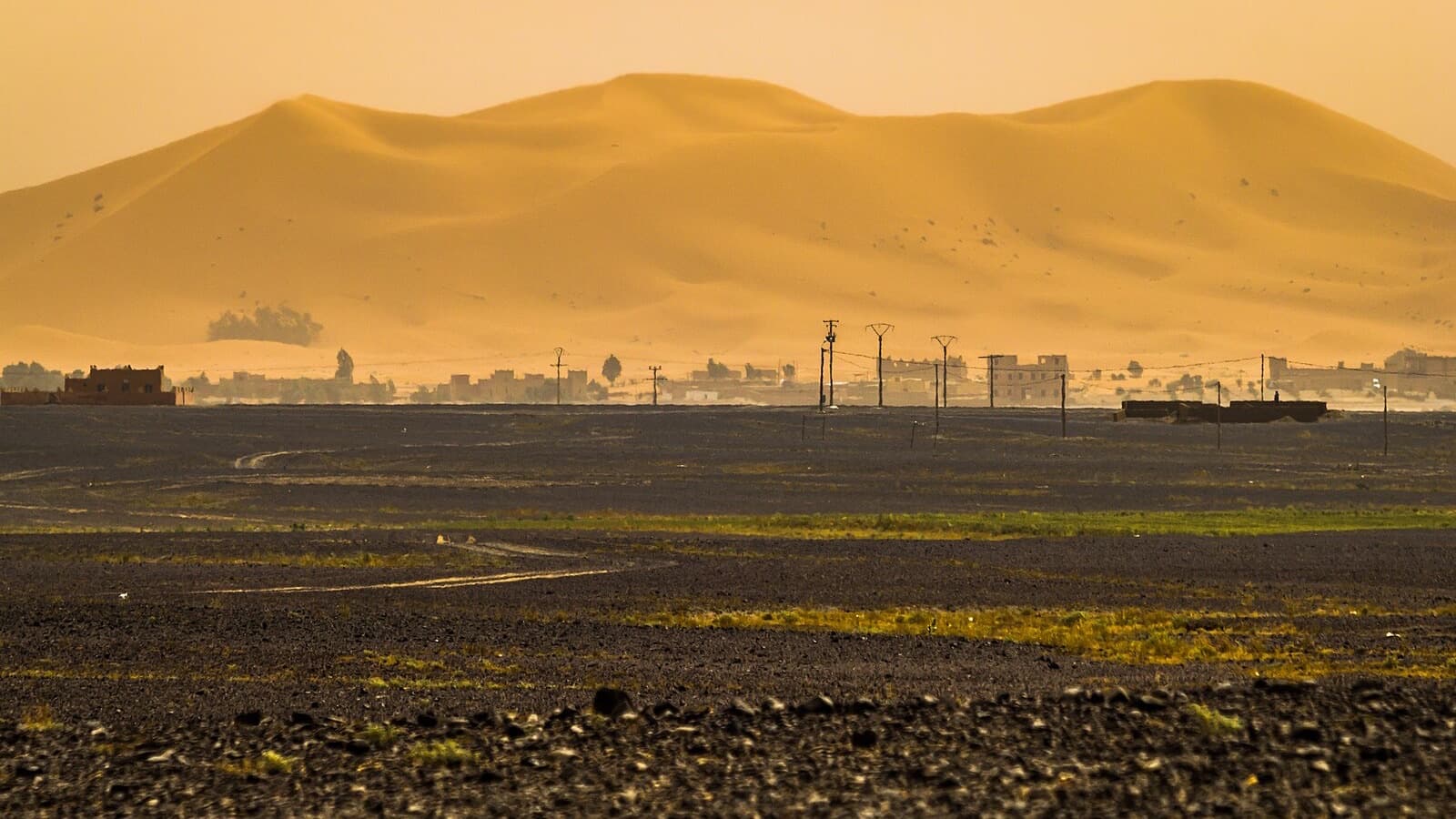
Cover photo: "Merzouga Dunes and the black desert" by Ayman Abdelilah, licensed under CC BY-SA 4.0 via Wikimedia Commons.