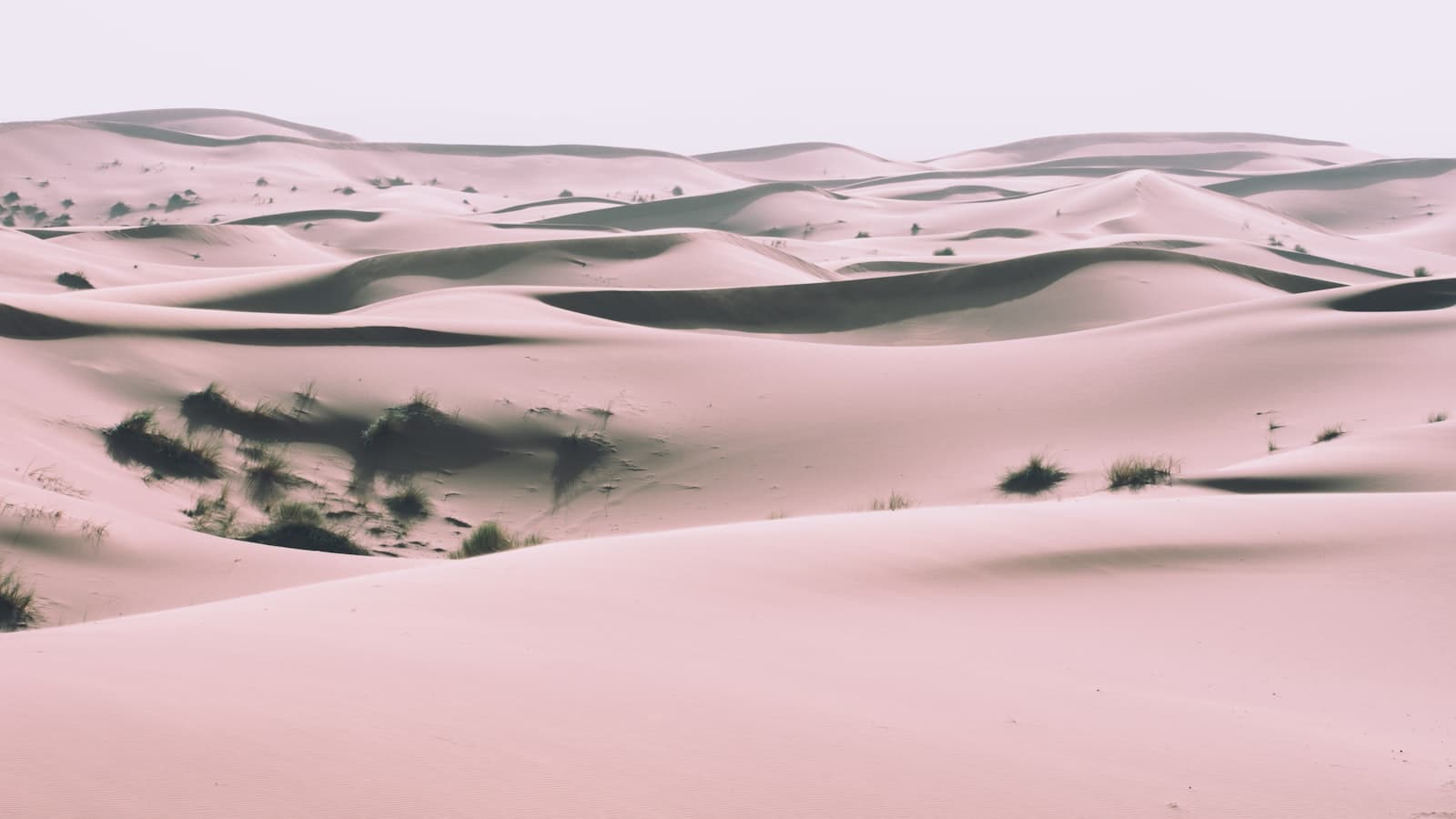
Aousserd Weather: Temperature & Conditions in the Saharan Town
Aousserd sits at 22.55° N, 14.33° W, roughly 35 metres above sea level, in the Dakhla-Oued Ed-Dahab region of far southern Morocco, about 170 kilometres southeast of Dakhla on the road toward the Mauritanian border. Its climate belongs to the BWh class of the Köppen classification (hot desert climate): the mean annual temperature exceeds 18 °C and rainfall stays far below the climatic threshold. It is one of the most arid and unforgiving localities in the Kingdom, where the weather in Aousserd is highly predictable year-round: clear skies, a blazing sun, and persistent winds.
This guide offers a technical reading of the temperature in Aousserd by month and season, solar radiation, UV index, winds, humidity, and rainfall. For real-time readings and 14-day forecasts, always check the live Aousserd weather page.
Temperature in Aousserd through the seasons
Aousserd is marked by very large temperature swings between day and night (the diurnal range can reach 18–20 °C), and between summer and winter. The table below summarises the seasonal averages:
| Season | Daytime high | Night low | Notes |
|---|---|---|---|
| Winter (Dec–Feb) | 22–26 °C | 10–14 °C | Mildest season, cool nights |
| Spring (Mar–May) | 28–34 °C | 15–19 °C | Daytime winds raise the felt heat |
| Summer (Jun–Aug) | 40–46 °C | 22–26 °C | Peak heat, avoid daytime outings |
| Autumn (Sep–Nov) | 30–36 °C | 17–21 °C | Gradual easing of the heat |
During July and August, the temperature in Aousserd can exceed 45 °C, and the bare flat ground reaches far higher values. In these conditions, venturing out in daytime off paved roads without adequate water and mechanical preparation is strongly discouraged.
Monthly climate table for Aousserd
The values below are typical climate averages derived from regional modelling (Aousserd's continental hinterland); they help frame the annual cycle and do not replace real-time weather tracking:
| Month | High °C | Low °C | Rain mm |
|---|---|---|---|
| January | 23 | 12 | 3 |
| February | 25 | 13 | 2 |
| March | 28 | 15 | 2 |
| April | 31 | 16 | 1 |
| May | 34 | 18 | 1 |
| June | 38 | 20 | 0 |
| July | 42 | 23 | 0 |
| August | 43 | 24 | 0 |
| September | 38 | 22 | 4 |
| October | 32 | 18 | 3 |
| November | 26 | 14 | 2 |
| December | 23 | 12 | 3 |
As shown, rainfall in Aousserd amounts to only a few tens of millimetres per year, concentrated in autumn (September–October). To compare with other Moroccan regions, see our guide to rainfall by city and region.
Solar radiation and sunshine hours
Thanks to its Saharan position and the absence of vegetation and cloud cover, Aousserd receives between 3,200 and 3,700 sunshine hours per year — among the highest in Morocco. Shortwave incident radiation peaks between April and July, exceeding 7.2 kWh/m² per day. This exceptional figure makes the region one of Morocco's richest solar resources, harnessed within the national strategy described in our guide to renewable energy and 2030 targets.
Ultraviolet (UV) index
The UV index in Aousserd approaches 11 and above ("extreme") at the height of summer, and stays very high year-round owing to the thin subtropical air column and clear skies. Strict protection is required: SPF 50+ sunscreen, UV400 sunglasses, and covering clothing. To learn how to read the index and understand its risks, see our guide to the UV index in Morocco.
Winds and sandstorms
Wind speed in Aousserd is sustained, driven by near-permanent north-easterly trade winds (30 to 70 km/h), which sometimes ramp up into sand-laden gusts: the sandstorms. This wind resource makes the Dakhla–Aousserd axis one of the richest in the world (akin to Dakhla's global fame for wind-driven water sports). In practice, these storms reduce visibility on the Dakhla road, accelerate infrastructure erosion, and drive PM10 levels up — see our guide to air quality in Morocco.
Humidity and dew point
Unlike coastal Dakhla, where relative humidity reaches about 70% under the cool Canary Current and upwelling, humidity in Aousserd stays low inland (around 30–45%), with a low dew point. The result: a dry desert heat, strong radiative cooling at night (hence cool evenings even in summer), and a higher dehydration risk, as the body loses water through evaporation without always sensing it. To compare coast and inland, see our guide to sea water temperature in Morocco.
A hot desert climate: permanent aridity and high evaporation
Annual rainfall in Aousserd rarely exceeds 50 mm, and years can pass without any meaningful rain. Conversely, potential evapotranspiration far exceeds rainfall — a clear marker of hyper-aridity. This chronic dryness makes the weather in Aousserd highly predictable. Learn more in our guides to Morocco's five climates and Sahara desert weather.
The best time to visit Aousserd
If your visit is optional, the ideal window is winter and early spring (December–March), when the temperature drops to bearable daytime levels (22–26 °C) and the nights turn pleasantly cool. Avoid July and August entirely unless it is a business or transit trip. To compare Aousserd with other Moroccan cities, see our guide to the best time to visit Moroccan cities.
Live weather for Aousserd
The figures above are climate averages that help you understand the general pattern, but they are no substitute for following the actual weather. To check Aousserd's temperature today and the 14-day outlook, please visit our page: Aousserd Weather — 14-Day Forecast.
Frequently asked questions
How hot does it get in Aousserd in summer?
The daytime high in Aousserd during summer (June–August) ranges between 40 and 46 °C, and can approach 48 °C during exceptional heatwaves. At night it rarely drops below 22 °C. This is one of Morocco's hottest climates; these episodes are described in our dossier on heatwaves in Morocco.
Does it ever rain in Aousserd?
Very rarely. Annual rainfall does not exceed 50 mm, and entire seasons can pass without any notable rain. Autumn rains, when they occur, are light and scattered, but can occasionally trigger sudden runoff in dry riverbeds — hence the vigilance around flash floods in Morocco.
How many sunshine hours does Aousserd get, and is the UV dangerous?
Aousserd receives between 3,200 and 3,700 sunshine hours per year, and the UV index approaches 11 and above (extreme) in summer. SPF 50+ sunscreen and UV400 sunglasses are recommended year-round, especially midday. See our UV index guide for Morocco.
What is the wind speed in Aousserd?
North-easterly trade winds blow at 30 to 70 km/h, sometimes higher in sand-laden gusts. This makes it one of Morocco's best wind resources, but demands caution on the road during sandstorms (reduced visibility).
When is the best time to visit Aousserd?
The best period is winter and early spring (December–March), with daytime temperatures between 22 and 26 °C and refreshing nights. Avoid the summer peak (July–August) if at all possible.
Weather coverage is based on the regional climate pattern (Köppen class BWh) and operational data from Morocco's Directorate General of Meteorology and international forecast services. Monthly values are typical averages for the continental hinterland. For real-time values, always refer to the live Aousserd weather.