Morocco: A Country with Five Climates
Few countries on Earth can rival Morocco's extraordinary climatic diversity. Spanning roughly 710,850 square kilometers, this North African kingdom manages to compress five distinct climate zones into a territory smaller than the US state of Texas. A traveler can leave the snow-capped peaks of the High Atlas in the morning, drive through semi-arid steppe by midday, and camp under scorching Saharan skies by nightfall. Understanding these five climates is essential for anyone planning a visit, studying the region's ecology, or simply curious about how geography shapes daily life across the Maghreb.
1. The Mediterranean Climate: Morocco's Northern Edge
Morocco's northernmost strip, stretching from Tangier along the Rif coast to the Algerian border, enjoys a classic Mediterranean climate classified as Csa under the Koppen system. This zone is characterized by hot, dry summers and mild, wet winters.
Key Characteristics
- Summer temperatures typically range from 28 C to 35 C, with low humidity and almost no rainfall from June through August.
- Winter temperatures hover between 8 C and 16 C, with frequent rain events from November to March.
- Annual precipitation averages 600 to 800 mm, though sheltered valleys can receive less.
Cities like Tangier, Tetouan, and Al Hoceima sit squarely in this zone. The vegetation is unmistakably Mediterranean: cork oaks, wild olives, and aromatic scrubland carpet the hillsides. Farmers in this region grow citrus, figs, and grapes, much as their counterparts do across the strait in Andalusia.
The Rif Mountains: A Rainfall Powerhouse
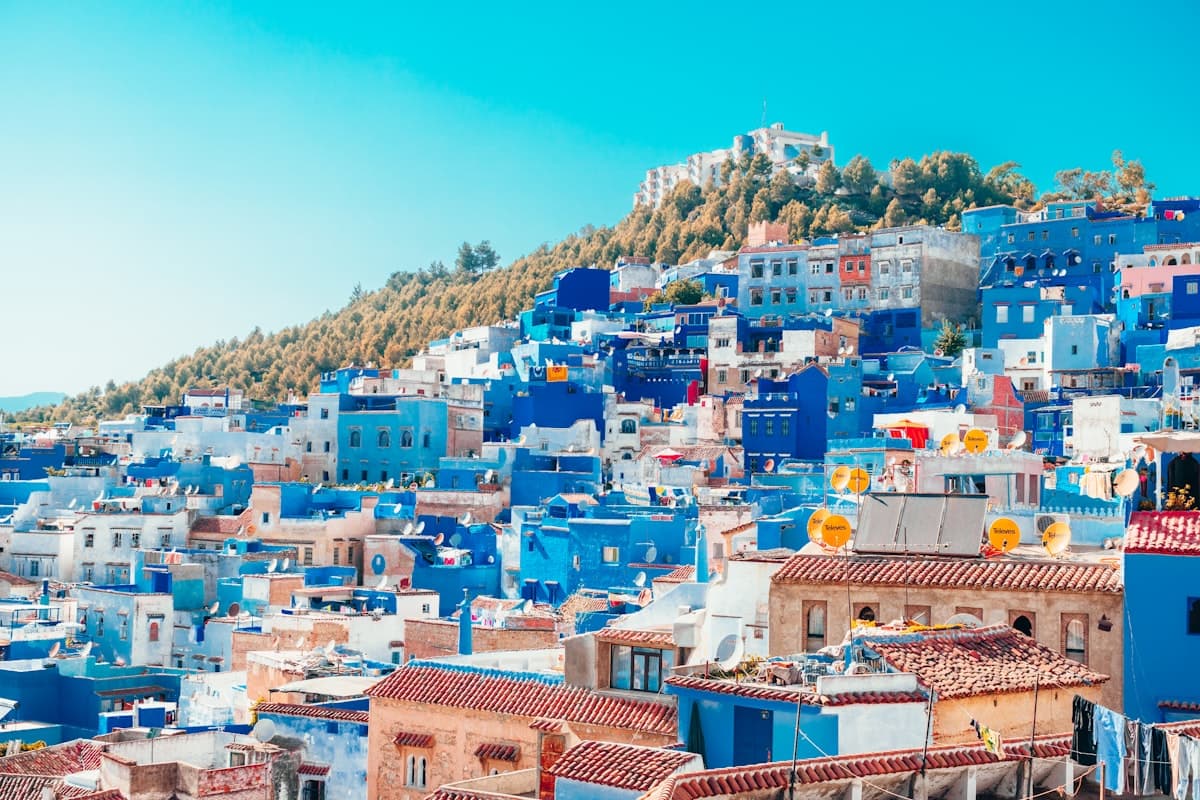
The Rif mountain range amplifies the Mediterranean pattern dramatically. As moisture-laden Atlantic and Mediterranean air masses are forced upward by the rugged terrain, orographic rainfall intensifies. Certain stations in the western Rif record over 2,000 mm of annual precipitation, making this area the wettest in all of Morocco and one of the wettest in North Africa. The town of Bab Taza, nestled in the hills south of Chefchaouen, regularly exceeds 1,800 mm per year. This abundant rainfall feeds the rivers that irrigate the Gharb plain, one of Morocco's most productive agricultural regions.
2. The Oceanic Climate: The Atlantic Seaboard
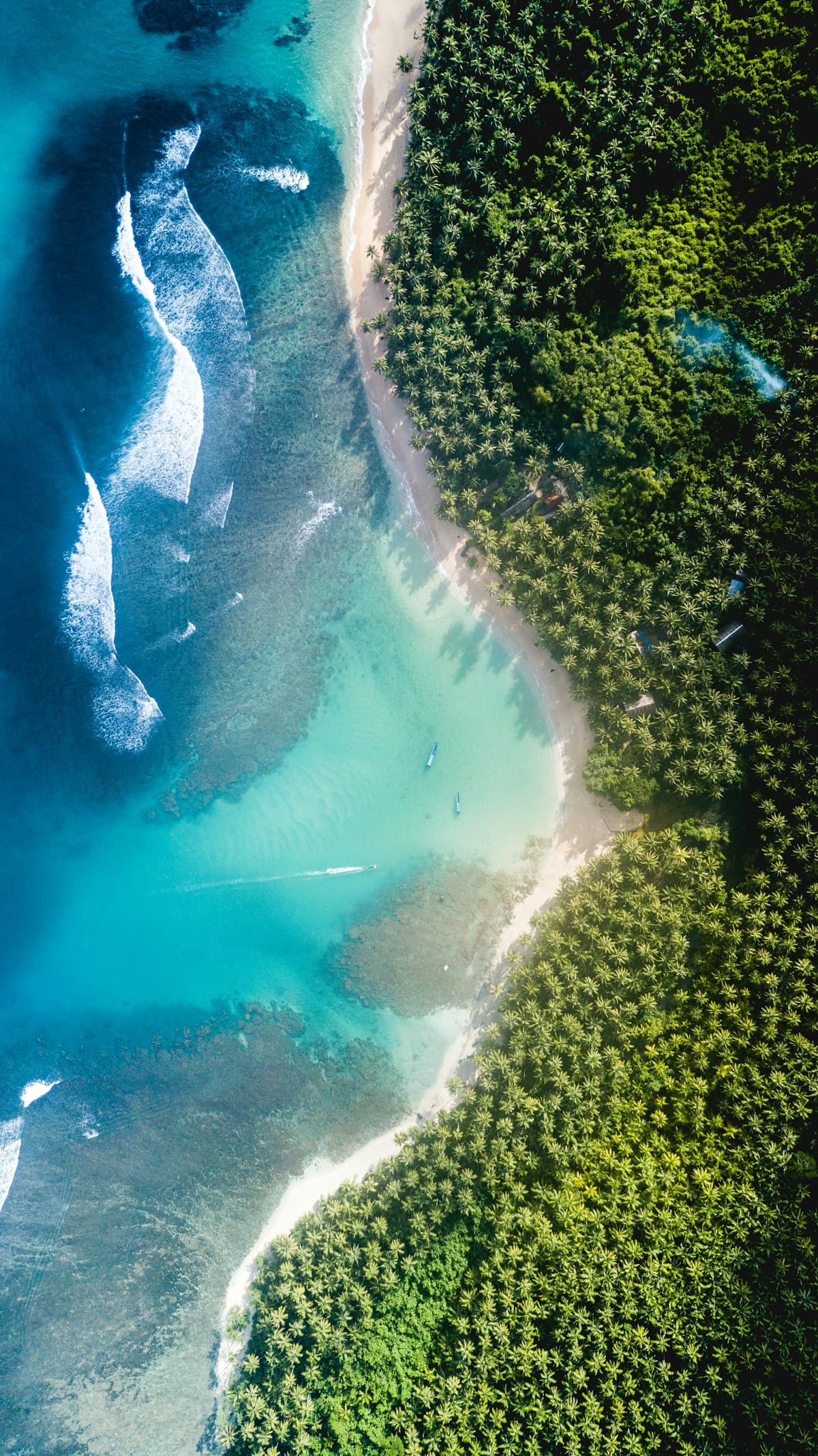
Morocco's long Atlantic coastline, stretching over 2,900 km from Tangier down to the Western Sahara, creates a distinctly oceanic influence that moderates temperatures year-round. This climate is most pronounced between Rabat and Agadir.
The Canary Current Effect
The cold Canary Current flows southward along Morocco's coast, keeping summer temperatures remarkably cool. While inland Marrakech bakes at 40 C or above in July, coastal Essaouira rarely exceeds 25 C on the same day. This temperature differential, sometimes exceeding 15 C over a distance of just 180 km, is one of the most dramatic in the Mediterranean basin.
Essaouira's Famous Microclimate
Essaouira deserves special mention. This coastal city experiences what meteorologists describe as a hyper-oceanic microclimate. The persistent Alizee trade winds, blowing from the north-northeast for much of the year, combine with the cold upwelling of the Canary Current to create conditions that feel more like coastal Portugal than North Africa.
- Summer highs rarely exceed 24 C.
- Winter lows seldom drop below 10 C.
- Annual temperature range is remarkably narrow, often less than 12 C between the coldest and warmest months.
- Morning fog is frequent, especially from May to September, when warm air flowing over the cold ocean surface condenses into thick banks of mist.
This microclimate has made Essaouira a haven for windsurfers and kitesurfers, who flock to the city for its reliable winds, and for tourists seeking relief from the summer heat of the interior.
3. The Continental-Mountain Climate: The Atlas Backbone
The Atlas mountain system, comprising the High Atlas, Middle Atlas, and Anti-Atlas ranges, creates a climate zone unlike anything else in Morocco. Here, altitude is the defining factor.
Altitude and Temperature
For every 1,000 meters of elevation gain, temperatures drop by roughly 6.5 C, a rate known as the environmental lapse rate. This means that while Marrakech at 450 meters elevation swelters at 40 C, the summit of Jbel Toubkal at 4,167 meters can be near freezing on the same summer day.
Snowfall and Winter Conditions
The High Atlas receives significant snowfall from December through March, and some years the snow lingers on north-facing slopes into June. The Middle Atlas town of Ifrane, sitting at 1,665 meters, holds Morocco's unofficial record for the coldest temperature ever recorded: a bone-chilling -23 C in February 1935. Today, Ifrane regularly sees winter temperatures below -10 C, and its cedar forests take on an almost Alpine appearance under a blanket of white.
The Rain Shadow
The Atlas mountains serve as Morocco's great climatic divide. Moisture-laden air from the Atlantic rises over the western slopes, cooling and releasing rain or snow. By the time this air descends on the eastern and southern slopes, it has lost most of its moisture. This rain shadow effect is the primary reason that southeastern Morocco transitions so sharply from green mountain valleys to arid steppe and desert.
4. The Semi-Arid Steppe: The Transitional Zone
Between the Atlas mountains and the Sahara lies a broad belt of semi-arid steppe. This zone, encompassing the Souss-Massa plain, the Draa-Tafilalet valleys, and the high plateaux east of the Atlas, receives between 200 and 400 mm of annual precipitation, enough to support sparse grassland and scattered trees but far too little for rain-fed agriculture.
Characteristics of the Steppe
- Temperature extremes are pronounced: summer days can exceed 42 C, while winter nights may dip below freezing.
- Rainfall is erratic: months of drought alternate with sudden, violent downpours that can cause devastating flash floods.
- Vegetation is dominated by esparto grass, jujube trees, and various drought-adapted shrubs. The iconic argan tree, found only in southwestern Morocco, is perfectly adapted to this semi-arid regime.
Cities like Ouarzazate and Errachidia sit in this transitional zone. Ouarzazate, sometimes called the "door of the desert," records an average of just 117 mm of rain per year, spread over a handful of intense events. The daily temperature range here is striking: a summer day might see temperatures swing from 18 C at dawn to 42 C by mid-afternoon.
Oasis Agriculture
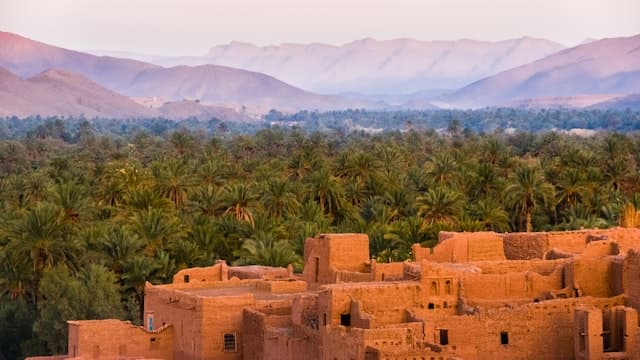
Despite the harsh conditions, human communities have thrived in this zone for millennia by exploiting underground water sources and developing sophisticated irrigation systems known as khettaras. These qanat-like tunnels channel groundwater from the Atlas foothills to oasis settlements, sustaining date palms, cereals, and vegetables in an otherwise inhospitable environment.
5. The Saharan Climate: Africa's Greatest Desert
South and east of the Anti-Atlas, Morocco gives way to the western edge of the Sahara, the world's largest hot desert. Here, the climate is defined by extremes.
Defining Features
- Rainfall is negligible, averaging less than 50 mm per year in most areas and effectively zero in some years.
- Summer temperatures are ferocious: the Draa valley and Zagora region routinely exceed 45 C, and the all-time Moroccan record of 50.4 C was set in Agadir during a 2023 heatwave, though Saharan stations have approached similar extremes.
- Diurnal temperature swings are among the largest on Earth. A summer day at 48 C can be followed by a night at 18 C, a range of 30 C in twelve hours. In winter, nighttime temperatures in the desert can plunge to near freezing, startling unprepared travelers.
- Humidity is extremely low, often below 10%, which makes even extreme heat somewhat more bearable but accelerates dehydration.
The Erg Chebbi and Erg Chigaga
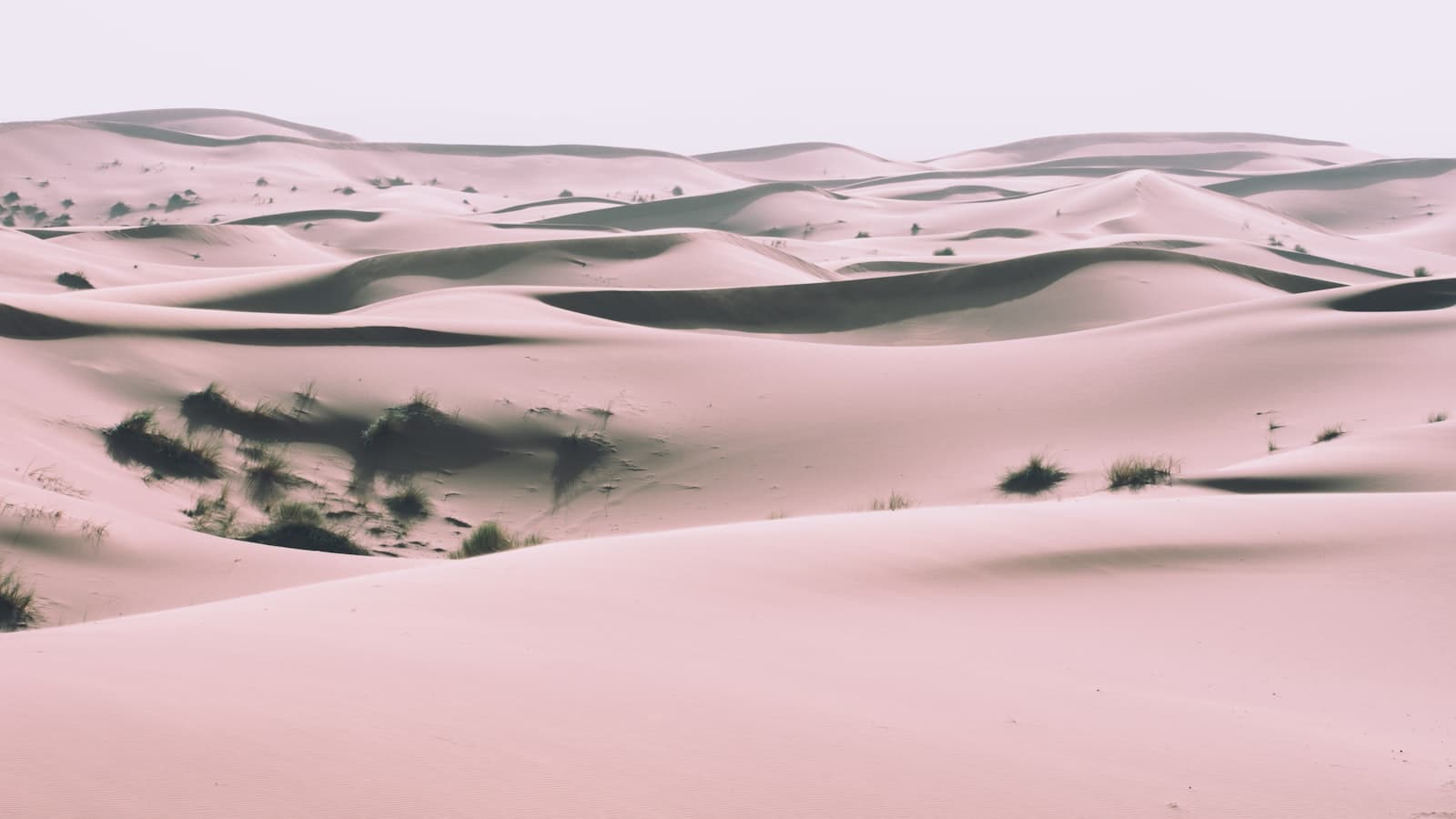
Morocco's two great sand seas, the Erg Chebbi near Merzouga and the Erg Chigaga near M'Hamid, are the most visually dramatic expressions of the Saharan climate. These towering dune fields, reaching heights of 150 meters, are shaped by the prevailing winds and create their own micro-weather patterns. Wind-driven sand can reduce visibility to near zero during storms, and the interplay of solar radiation on dark hamada (rocky desert) versus light-colored erg (sand desert) creates localized thermal circulation patterns that experienced desert guides learn to read.
How the Five Climates Interact
Morocco's climate zones do not exist in isolation. They interact through large-scale atmospheric dynamics, creating weather phenomena unique to this part of the world.
- The Chergui wind forms when hot Saharan air is channeled through Atlas passes and descends onto the coastal plains, bringing sudden temperature spikes of 10 to 15 C in a matter of hours.
- Atlantic depressions tracking eastward across the Mediterranean bring winter rain to the north and west, while the Atlas barrier shields the southeast.
- The Azores High, a semi-permanent area of high pressure in the central Atlantic, governs Morocco's dry summer season. When it shifts northward in summer, it blocks rain-bearing fronts; when it retreats southward in autumn, the rainy season begins.
Practical Implications for Travelers
Understanding Morocco's five climates is more than an academic exercise. It has real consequences for trip planning.
- Pack for at least two climates on any trip that covers significant distance.
- Expect coastal fog and wind if visiting Essaouira or Agadir, even in summer.
- Carry warm layers for Atlas passes and desert nights, regardless of the season.
- Check regional forecasts, not just the national one, as weather can vary enormously over short distances.
- Respect the extremes: heatstroke in the Sahara and hypothermia in the Atlas are both real risks.
Conclusion
Morocco's five climates are a product of its extraordinary geography: an Atlantic coastline, a Mediterranean shore, a towering mountain backbone, a transitional steppe, and the edge of the world's greatest desert, all compressed into a single country. This diversity is Morocco's great gift to travelers, scientists, and its own people, but it also demands respect. Whether you are hiking the High Atlas in a snowstorm, surfing the Atlantic swells off Taghazout, or watching the sun set over the dunes of Merzouga, you are experiencing one facet of a country that contains multitudes.