Understanding Morocco's Air Quality Index: What the Numbers Mean
Morocco's air quality varies dramatically — not just from city to city, but from one day to the next. A clear morning in Marrakech can deteriorate within hours when Saharan dust arrives. Casablanca's baseline pollution level is noticeably different from Tangier's, and both differ again from inland cities like Fes or Oujda.
This guide explains what the Air Quality Index (AQI) measures, how the scale works, which pollutants matter most in Morocco, and how to interpret the data shown on our air quality monitoring page.
What Is the AQI?
The AQI is a single number on a scale from 0 to 500 that summarizes how clean or polluted the air is at a given location. Higher numbers mean worse air quality and greater health risk.
Most countries use their own AQI scales. MoroccoHelp Meteo uses the US EPA AQI standard, which is the most widely adopted international reference. The scale is divided into six color-coded bands:
| AQI Range | Category | Color | Health Implication |
|---|---|---|---|
| 0–50 | Good | Green | Air quality is satisfactory. No risk. |
| 51–100 | Moderate | Yellow | Acceptable. Some pollutants may pose concern for unusually sensitive individuals. |
| 101–150 | Unhealthy for Sensitive Groups | Orange | Members of sensitive groups (children, elderly, asthmatics) may experience effects. |
| 151–200 | Unhealthy | Red | Everyone may begin to experience health effects. |
| 201–300 | Very Unhealthy | Purple | Health alert — serious effects for the entire population. |
| 301–500 | Hazardous | Maroon | Emergency conditions. Everyone is affected. |
The AQI value shown on our dashboard is recalculated every hour using data from Open-Meteo's air quality API, which aggregates readings from ground stations, satellite observations and atmospheric models.
The Pollutants That Matter in Morocco
Four pollutants drive Morocco's AQI readings more than any others:
PM2.5 (Fine Particulate Matter)
Particles smaller than 2.5 micrometers — about 30 times thinner than a human hair. These penetrate deep into the lungs and enter the bloodstream. In Morocco, PM2.5 comes from:
- Vehicle emissions (especially diesel engines in urban areas)
- Industrial output around Casablanca, Kenitra and Mohammedia
- Saharan dust — carried on the Chergui wind, this is the single largest contributor during dust events
- Agricultural burning in rural areas during harvest season
PM10 (Coarse Particulate Matter)
Particles between 2.5 and 10 micrometers. Less dangerous than PM2.5 but still harmful, especially to the respiratory system. Construction activity, unpaved roads and mining operations are major PM10 sources in Morocco.
During a Saharan dust event, PM10 levels in Morocco can spike above 500 µg/m³ — more than 10 times the WHO 24-hour guideline of 45 µg/m³. These events are most common from March to June and again in September.
Ozone (O₃)
Ground-level ozone is not emitted directly — it forms when nitrogen oxides and volatile organic compounds react in sunlight. In Morocco, ozone levels tend to peak in summer, particularly in the afternoons in large urban areas.
Nitrogen Dioxide (NO₂)
A direct product of combustion, primarily from vehicles and power plants. NO₂ is highest along busy road corridors in Casablanca, Rabat and Marrakech.
Seasonal Air Quality Patterns in Morocco
Morocco's air quality follows a predictable seasonal cycle shaped by weather patterns rather than industrial activity:
Winter (December–February): Moderate, Locally Variable
Stable atmospheric conditions trap pollutants near the ground, especially in valley cities like Fes and Marrakech. Without strong wind or rain to disperse them, PM2.5 from heating and traffic accumulates. AQI readings of 50–100 are common in these cities during calm winter nights.
Spring (March–May): Dust Season
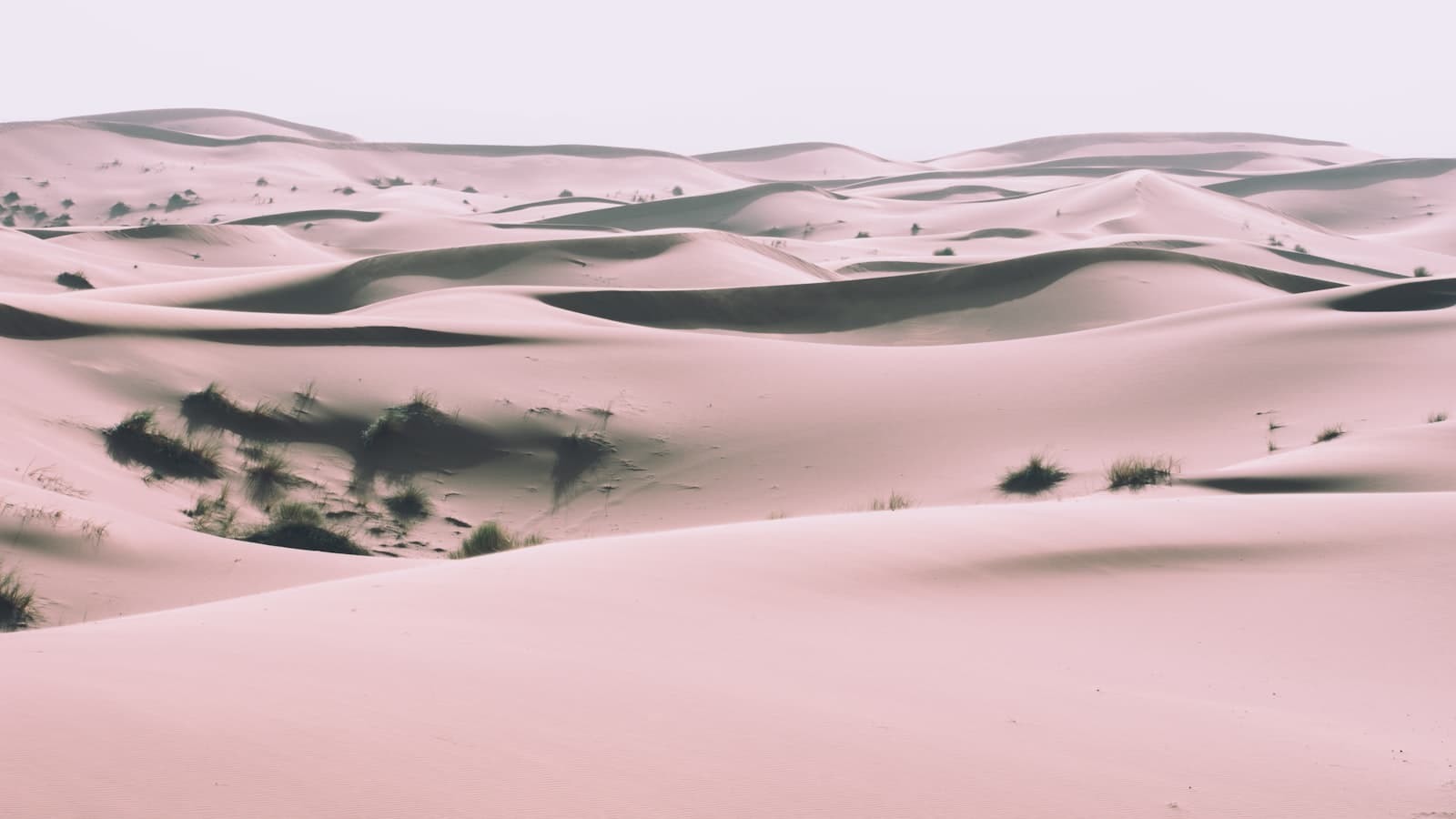
This is when Morocco experiences its most dramatic air quality swings. The Chergui wind — a hot, dry easterly — transports fine Saharan sand across the country. AQI values can jump from 30 to 200+ in a single day when a dust front passes. See The Chergui: Morocco's Scorching Desert Wind for details on how this wind works.
Summer (June–August): Generally Good at Coast, Ozone Inland
Atlantic sea breezes keep coastal cities clean — Tangier and Rabat frequently see AQI below 40. Inland cities are a different story: solar radiation drives ozone formation, pushing afternoon AQI into the 60–90 range in cities like Marrakech and Oujda.
Autumn (September–November): Second Dust Peak
A secondary period of Saharan dust activity occurs in September and October. The pattern is similar to spring but typically shorter in duration.
What the Numbers Mean for Your Daily Life
| AQI Range | What You Should Do |
|---|---|
| 0–50 | No precautions needed. Enjoy outdoor activities normally. |
| 51–100 | Generally safe. If you're sensitive to pollution, consider reducing prolonged outdoor exertion. |
| 101–150 | Sensitive groups should limit time outdoors, especially during peak traffic hours or dust events. |
| 151–200 | Reduce outdoor physical activity. Use masks rated N95 or higher during Saharan dust events. |
| 201+ | Stay indoors if possible. Keep windows closed and use air purifiers. |
During Saharan dust episodes — check the live AQI map before heading out. Dust events are forecastable: the DGM typically issues warnings 24–48 hours in advance.
Which Moroccan Cities Have the Best and Worst Air Quality
Based on available data (Open-Meteo / CAMS model averages):
- Best air quality: Coastal cities exposed to Atlantic winds — Tangier, Essaouira, Safi
- Most variable: Cities exposed to Saharan dust corridors — Marrakech, Oujda, Errachidia (see our Sahara desert weather guide)
- Most impacted by traffic: Casablanca, Rabat, Fes — dense urban centers with heavy diesel vehicle use
- Industrial contributions: Mohammedia, Kenitra — petrochemical and fertilizer production areas
Key Takeaways
- The AQI runs from 0 to 500, divided into six color bands from "Good" to "Hazardous"
- PM2.5 and Saharan dust are the dominant pollution concerns in Morocco
- Spring (March–May) is the riskiest period due to Saharan dust events
- Coastal cities generally have cleaner air than inland cities
- Check live AQI data before planning outdoor activities during dust events
- Sensitive groups should take precautions when AQI exceeds 100
Sources
- US EPA — Air Quality Index (AQI) Technical Assistance Document
- WHO — Global Air Quality Guidelines (2021 update, PM2.5 annual guideline: 5 µg/m³, 24-hour: 15 µg/m³)
- Open-Meteo Air Quality API — Real-time and forecast AQI data for Morocco
- CAMS (Copernicus Atmosphere Monitoring Service) — Saharan dust aerosol optical depth forecasts
- DGM (Direction de la Météorologie Générale du Maroc) — Dust storm warnings and atmospheric bulletins