Two Worlds Apart: Morocco's Coastal vs. Inland Weather
Drive east from Essaouira on a July afternoon and you will experience one of the most dramatic weather transitions anywhere on Earth. In the space of just 180 km, the temperature can climb from a breezy 22 C on the coast to a scorching 42 C in Marrakech. The air shifts from damp and salty to dry and dusty. The sky changes from hazy white to fierce blue. It is as though you have crossed from one continent to another, yet you have barely left the same province.
This coastal-inland divide is one of the defining features of Morocco's climate, and it is driven by a fascinating interplay of ocean currents, atmospheric dynamics, and mountain geography. Understanding it is essential for travelers, farmers, urban planners, and anyone trying to make sense of Moroccan weather.
The Canary Current: Morocco's Natural Air Conditioner
The single most important factor shaping Morocco's coastal climate is the Canary Current. This cold ocean current flows southward along the northwest African coast from the Iberian Peninsula toward the Canary Islands and beyond, carrying frigid water from the North Atlantic deep into subtropical latitudes.
How Cold Is It?
Sea surface temperatures along the Moroccan coast are remarkably cold for their latitude. In summer, when you might expect warm tropical waters, the coast between Safi and Agadir sees sea surface temperatures of just 17 C to 19 C. For comparison, the Mediterranean coast of Morocco at the same latitude has sea temperatures of 22 C to 24 C, and tropical waters at similar latitudes in the Caribbean or South China Sea reach 28 C or higher.
Coastal Upwelling
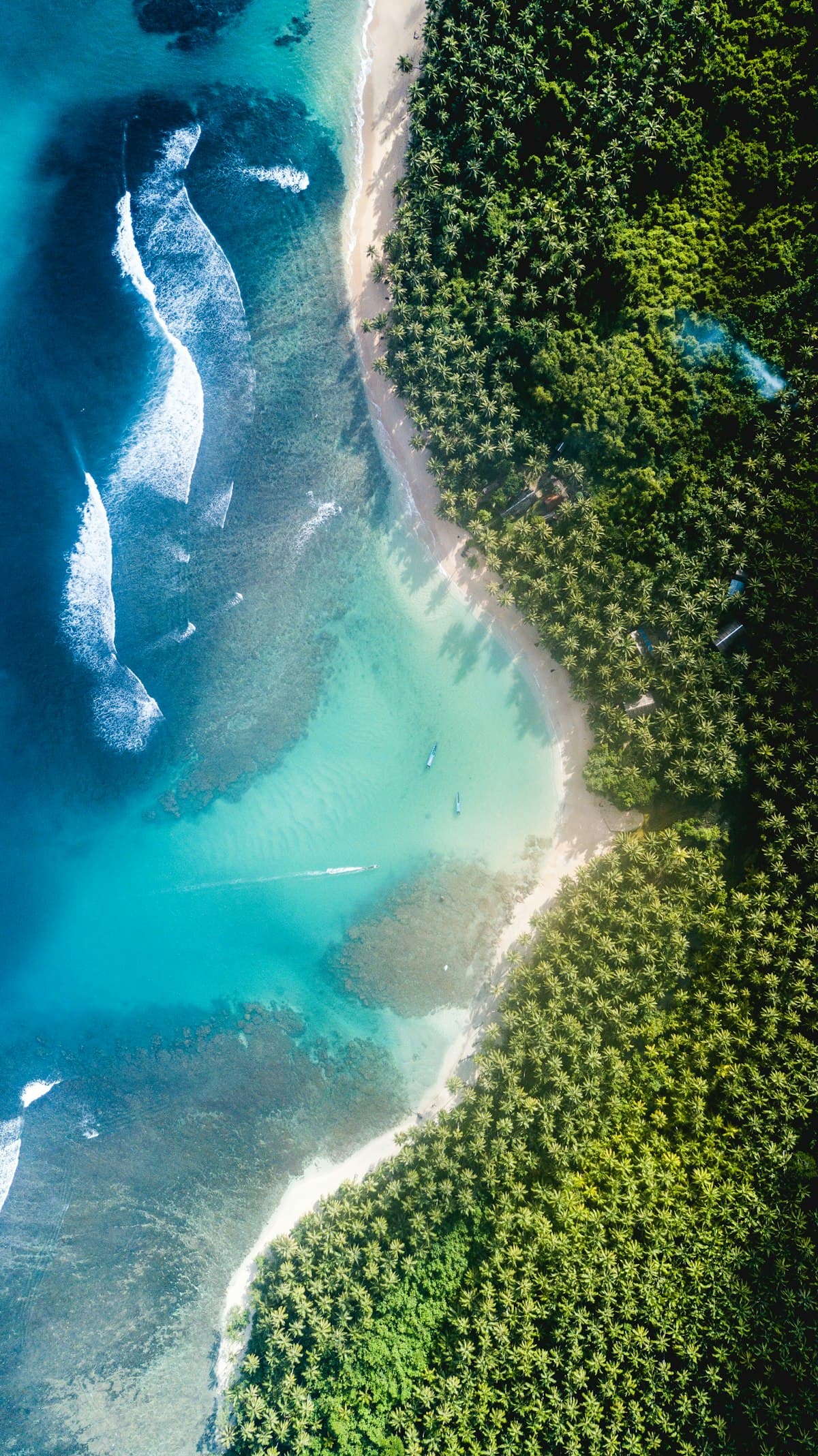
The cold temperatures are intensified by coastal upwelling. The prevailing northerly trade winds push surface water away from the shore through a process known as Ekman transport. This displaced surface water is replaced by cold, nutrient-rich water from depths of 100 to 300 meters. The upwelling zone is especially strong between Safi and Agadir, which is why this stretch of coast has some of the richest fishing grounds in the Atlantic and some of the coolest summer temperatures in Africa.
The Cooling Effect
This cold water acts as a massive natural air conditioner for the coastal strip. Air passing over the cool ocean surface is chilled from below, creating a marine layer that keeps temperatures low, even when the sun is at its most intense. The effect is dramatic:
| City | Distance from Coast | July Average High |
|---|---|---|
| Essaouira | 0 km (coast) | 23 C |
| Chichaoua | 90 km inland | 38 C |
| Marrakech | 180 km inland | 42 C |
A temperature gradient of roughly 1 C per 10 km of inland distance is remarkable by any global standard.
Coastal Fog: The Invisible Blanket
One of the most distinctive features of Morocco's Atlantic coast is persistent fog, especially during the summer months. This might seem counterintuitive; why would the sunniest season produce the most fog?
How Coastal Fog Forms
The mechanism is straightforward. Warm, moist air from over the open Atlantic drifts toward the coast. When this air encounters the cold water of the Canary Current and upwelling zone, it cools rapidly. If the cooling is sufficient, the moisture in the air condenses, forming a dense bank of fog known as advection fog.
Where and When
- Geography: The fog is most frequent and persistent between El Jadida and Agadir, with Essaouira and Safi being the foggiest cities. North of Casablanca, the fog is less common because the upwelling weakens.
- Season: Fog peaks from June to September, precisely when the upwelling is strongest and the temperature contrast between the air and the sea surface is greatest.
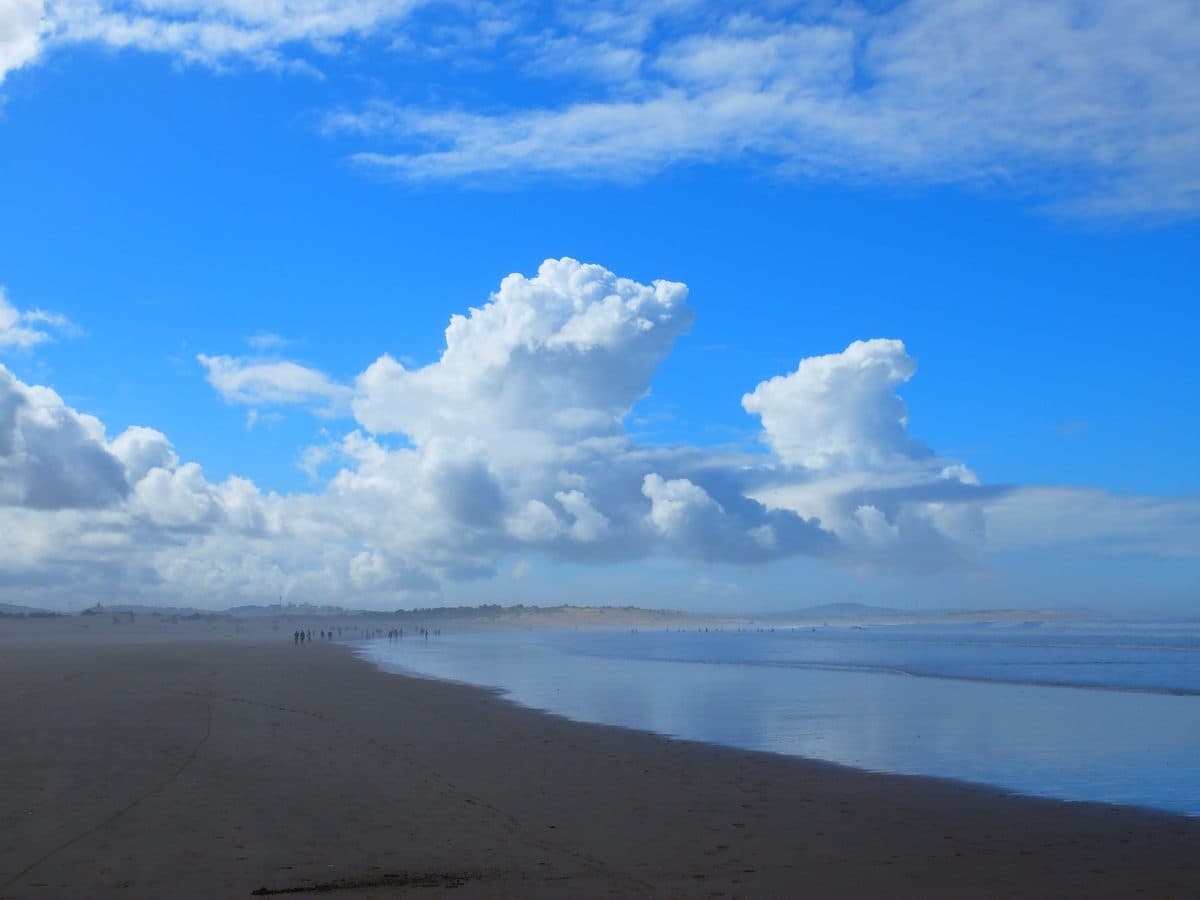
- Daily cycle: Fog typically forms overnight or in the early morning, often burning off by midday as solar radiation heats the land and creates an onshore breeze that pushes the fog bank seaward. However, on some days, particularly when the marine layer is thick, the fog persists all day, keeping coastal areas grey and cool while the interior bakes.
Impact on Life
Coastal fog has both benefits and drawbacks.
Benefits:
- It provides natural irrigation for coastal agriculture. Moisture from fog deposits on plant surfaces, supplementing the meager rainfall. This phenomenon has historically supported the argan tree forests of the Souss-Massa region, which thrive on fog drip.
- It moderates temperatures, reducing heat stress on people, animals, and crops.
Drawbacks:
- Reduced visibility can affect shipping, fishing, and coastal driving.
- Tourism at beach resorts can be disrupted when visitors expecting African sunshine find themselves wrapped in cool mist.
- Solar energy installations along the coast, of which Morocco has several major projects, must account for reduced solar radiation during foggy periods.
Sea Breezes: The Daily Tug of War
Even when fog is absent, the coast experiences a daily weather cycle driven by the temperature difference between land and sea.
The Daytime Sea Breeze
As the sun heats the land during the morning, the air over the land warms and rises, creating a local low-pressure zone. Cooler air from over the ocean rushes in to fill the gap, creating an onshore breeze that typically picks up by late morning and peaks in the early afternoon.
This sea breeze penetrates inland for 20 to 50 km, depending on the wind strength and terrain. In Casablanca, the sea breeze can drop afternoon temperatures by 5 C to 8 C compared to what they would be without the oceanic influence. In Rabat, the effect is similar.
The Nighttime Land Breeze
After sunset, the process reverses. The land cools faster than the ocean, and a gentle offshore breeze develops. This land breeze is weaker than the sea breeze and typically only extends a few kilometers out to sea, but it is responsible for the clear skies that often develop over the coast at night.
The Sea Breeze Front
Where the advancing sea breeze meets the hot, still air of the interior, a sharp boundary called the sea breeze front forms. This front is sometimes visible as a line of clouds or a sudden shift in wind direction. Temperatures can drop several degrees within minutes as the front passes. Travelers driving inland from the coast in the afternoon sometimes experience this transition as a sudden wall of heat.
Essaouira vs. Marrakech: A Case Study
The contrast between these two cities, connected by a direct highway and separated by just 180 km, is the most vivid illustration of Morocco's coastal-inland divide.
Essaouira
- Location: Directly on the Atlantic coast, fully exposed to the Canary Current and trade winds.
- Summer character: Cool, breezy, and often foggy. July average high is 23 C. Locals wear light jackets in the evening. Windsurfers crowd the beach. The medina walls provide shelter from the persistent wind.
- Winter character: Mild and occasionally rainy. January average high is 18 C, low is 10 C. Storms bring spectacular surf but rarely extreme cold.
- Annual temperature range: Just 5 C between the warmest and coolest month averages. This is one of the most thermally stable climates in Africa.
Marrakech
- Location: 180 km inland, on the Haouz plain at 450 meters elevation, shielded from oceanic influence by distance and low hills.
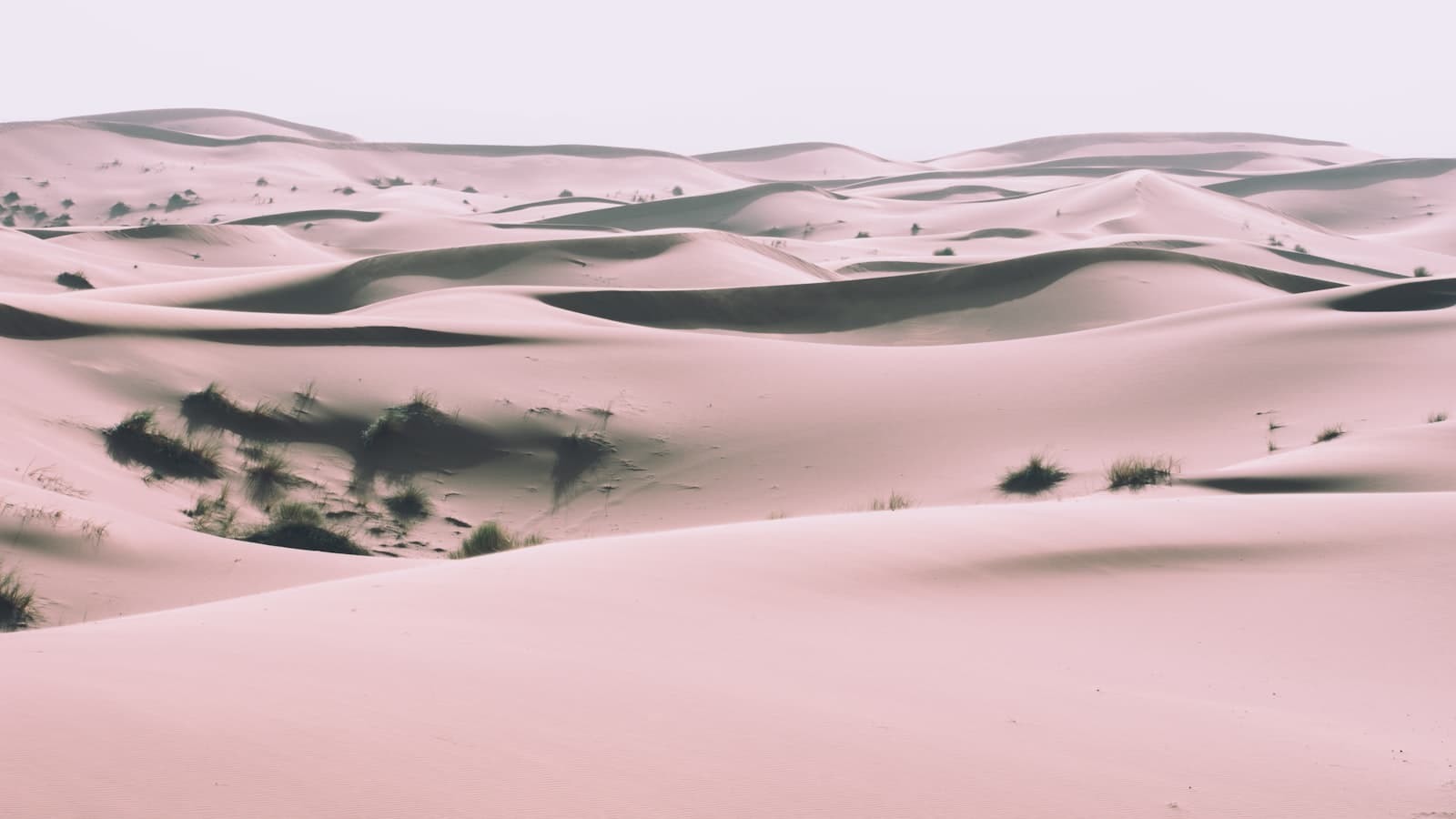
- Summer character: Ferociously hot and dry. July average high is 38 C to 40 C, with frequent spikes above 44 C. The city empties in the afternoon as residents retreat behind thick riad walls. The swimming pool becomes a survival tool, not a luxury.
- Winter character: Cool and sometimes rainy, with clear, crisp days. January average high is 18 C, but nights can dip to 5 C. Frost is rare but possible.
- Annual temperature range: Over 20 C between the warmest and coolest month averages. This continental-style range is typical of inland Morocco.
The Transition Zone
The road between the two cities, the N8 highway, provides a textbook lesson in climate transition. Leaving Essaouira, you drive through argan forests nourished by coastal fog. Around Chichaoua, 90 km inland, the argan gives way to olive groves and then to the dry scrubland of the Haouz plain. The temperature gauge in your car climbs steadily. By the time you reach the outskirts of Marrakech, the landscape is brown and dusty, and the air shimmers with heat.
Other Coastal-Inland Contrasts
The Essaouira-Marrakech axis is the most famous example, but similar contrasts exist elsewhere in Morocco.
Casablanca vs. Fes
Casablanca's coastal position keeps July averages at 26 C, while Fes, 290 km inland in a sheltered basin, regularly hits 36 C. The difference is compounded by Fes's position in a natural basin that traps hot air.
Agadir vs. Taroudant
Agadir, on the coast, rarely exceeds 30 C in summer thanks to strong upwelling. Taroudant, just 80 km inland in the Souss valley, can reach 45 C on the same day. Local legend calls Taroudant "the frying pan of Morocco."
Tangier vs. Tetouan
Even in the north, where the climatic gradient is less extreme, coastal Tangier is typically 3 C to 5 C cooler in summer than Tetouan, just 60 km to the east but set slightly inland.
The Atlas Barrier
The Atlas Mountains amplify the coastal-inland divide by blocking the penetration of maritime air into southeastern Morocco. Atlantic air masses that bring rain and moderate temperatures to the coast and western plains are forced upward over the Atlas, losing their moisture on the windward side. By the time they descend on the eastern slopes, they are warm and dry, contributing to the semi-arid and desert conditions of the interior.
Without the Atlas, Morocco's inland regions would likely receive more rainfall and experience somewhat less extreme temperatures. The mountains create a sharp climatic boundary that separates two fundamentally different weather regimes within a single country.
Implications for Travelers
Packing
A trip that includes both Essaouira and Marrakech in summer requires two wardrobes: a windbreaker and layers for the coast, light cotton and sun protection for the interior. Many visitors make the mistake of packing only for the expected heat and find themselves cold and windblown on the coast.
Itinerary Planning
Smart travelers use the coastal-inland contrast to their advantage. Spend the hottest days of a summer trip on the coast, where the ocean keeps temperatures bearable, and visit inland cities like Marrakech and Fes in the morning and evening, retreating to air-conditioned accommodations during the afternoon peak.
Driving
The temperature transition on inland drives can cause drowsiness and dehydration. Keep water in the car, use air conditioning wisely, and take breaks if you feel the heat affecting your concentration.
Conclusion
Morocco's coastal-inland weather divide is one of the most dramatic climate contrasts found within any single country. The Canary Current, coastal fog, sea breezes, and the Atlas barrier combine to create two fundamentally different weather worlds separated by distances that can be covered in a two-hour drive. This duality is central to Morocco's character: it is a country where the cool, misty Atlantic meets the blazing Saharan edge, and everything in between is a gradation of one extreme to the other.