Earthquake Risk in Morocco: Seismic Zones, History & Preparedness
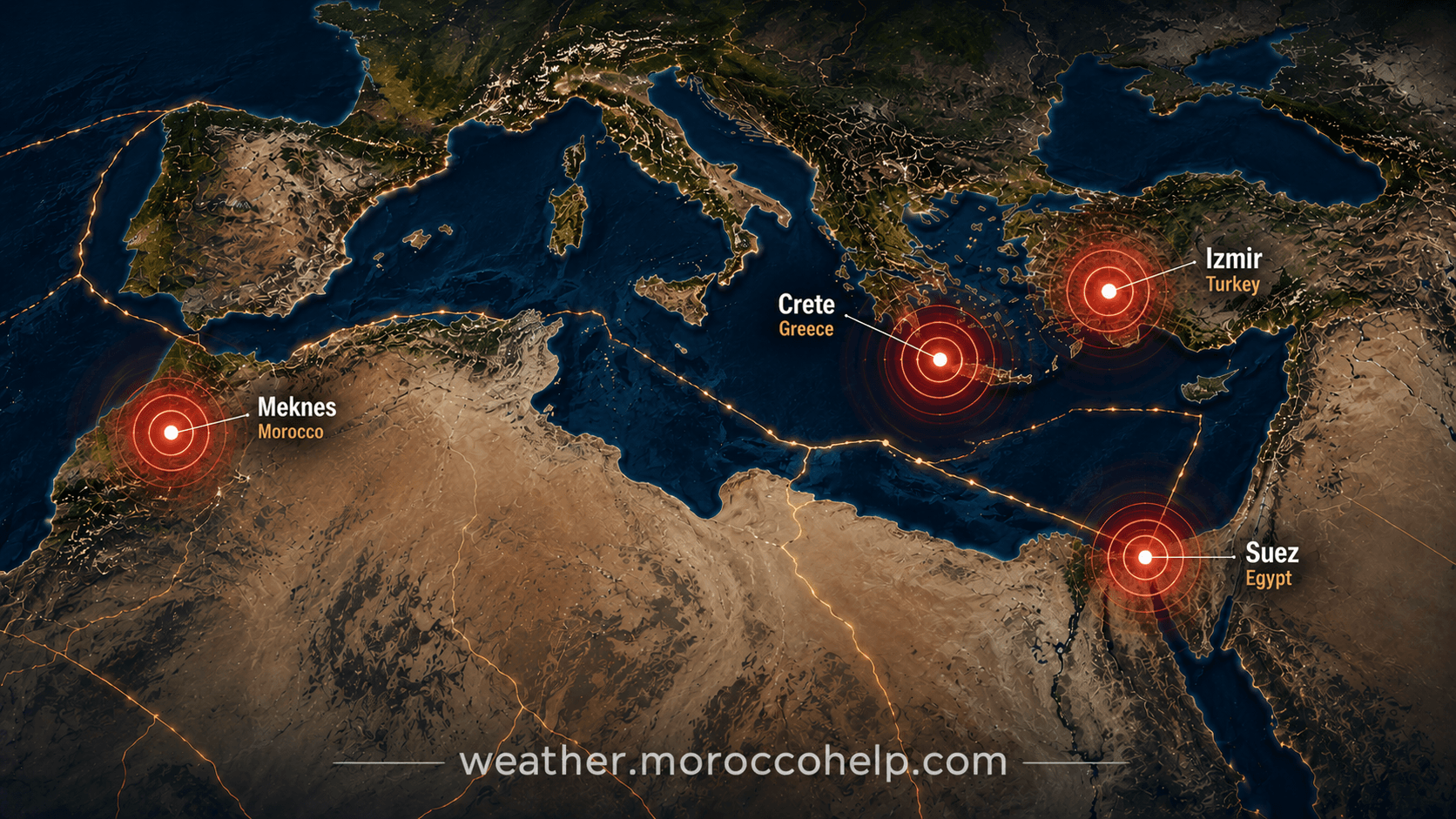
Morocco sits at the boundary between the African and Eurasian tectonic plates — a slow-motion collision that has shaped the Atlas and Rif mountain ranges over millions of years and continues to generate earthquakes today. While Morocco does not experience the frequency of seismic activity seen in Turkey or Japan, the country has a documented history of destructive earthquakes, most recently the Al Haouz earthquake of September 8, 2023.
This guide maps out Morocco's seismic zones, reviews significant historical events, and outlines practical preparedness measures.
For real-time seismic data in the Morocco region, visit our earthquake monitoring page, which displays live data from the EMSC (European-Mediterranean Seismological Centre).
Morocco's Seismic Zones
Morocco's earthquake risk is not uniform. Three distinct tectonic environments produce different levels of hazard:
The Alboran Sea Zone (Northern Morocco)
The Alboran Sea, between Morocco and Spain, is the most seismically active part of Morocco's territory. The convergence of the African and Eurasian plates here generates moderate earthquakes at shallow depths. This zone produced the destructive 2004 Al Hoceima earthquake (Mw 6.4) which killed over 600 people and destroyed thousands of homes.
Cities at elevated risk in this zone: Al Hoceima, Nador, Tangier, Tetouan
The Atlas Mountains Zone (Central Morocco)
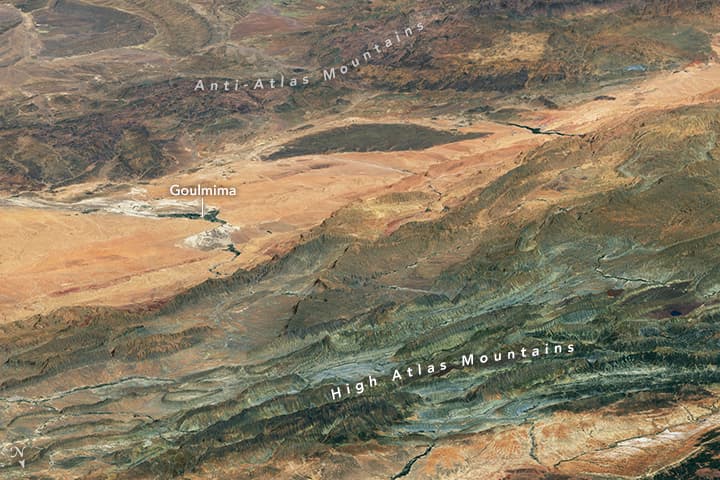
The High Atlas and Middle Atlas are being pushed upward by the same plate collision. Earthquakes here tend to be less frequent but can be very powerful when they occur. The 2023 Al Haouz earthquake (Mw 6.8) struck in the High Atlas near Marrakech — the deadliest Moroccan earthquake in over 60 years.
Cities at elevated risk: Marrakech, Beni Mellal, Azilal, Ouarzazate, Khenifra
The Nekor and Rif Zone (Northeast)
The Rif Mountains have a complex fault system with a history of moderate earthquakes. The 1994 Al Hoceima swarm and the 2004 mainshock both originated in this zone.
Earthquakes in Morocco can occur with little or no warning. The 2023 Al Haouz event struck at 11:11 PM local time with no foreshocks detected by monitoring networks.
Notable Historical Earthquakes
| Year | Location | Magnitude (Mw) | Estimated Deaths | Key Details |
|---|---|---|---|---|
| 2023 | Al Haouz (High Atlas) | 6.8 | ~2,900 | Deepest earthquake in Moroccan record (18 km). Destroyed villages in Taroudant and Chichaoua provinces. |
| 2004 | Al Hoceima (Rif) | 6.4 | ~630 | Shallow depth (5 km). Heavy damage to traditional masonry structures. |
| 1960 | Agadir | 5.8 | ~12,000 | Shallow earthquake under the city center. Destroyed most of Agadir. Led to modern seismic building codes in Morocco. |
| 1946 | Atlas (Dades Valley) | 6.0 | Dozens | Mountain region with limited infrastructure. |
| 1909 | Marrakech region | 5.5 | Unknown | Moderate damage to the medina. |
| 1755 | Lisbon (felt across Morocco) | 8.5+ | Unknown | The Great Lisbon Earthquake generated a tsunami that struck the Moroccan coast, causing significant damage in Tangier and Essaouira. |
Understanding Earthquake Magnitude
Earthquakes are measured on several scales. The most relevant for Morocco:
- Moment Magnitude (Mw): The standard measure for all modern earthquakes. Each whole-number increase represents roughly 32 times more energy released. A Mw 6.8 releases about 32 times more energy than a Mw 5.8.
- Depth: Shallower earthquakes cause more surface damage. The 1960 Agadir quake was only ~3 km deep. The 2023 Al Haouz quake was 18 km deep — deeper, but much more powerful.
The difference between the 1960 Agadir earthquake (Mw 5.8) and the 2023 Al Haouz earthquake (Mw 6.8) is not "just one point." The 2023 event released roughly 1,000 times more energy than the 1960 event.
Morocco's Building Code and Seismic Standards
After the 1960 Agadir earthquake, Morocco introduced seismic building regulations that have been progressively strengthened:
- 1960: First seismic code (post-Agadir)
- 1994: Updated code covering more regions
- 2011: RPS 2011 (Règlement Parasismique) — current standard, classifying Morocco into 4 seismic zones with specific building requirements
The RPS 2011 assigns different reinforcement requirements based on the seismic zone, soil type and building importance category. However, enforcement in rural areas — where traditional adobe and unreinforced masonry construction predominates — remains limited.
Practical Earthquake Preparedness
Before an Earthquake
- Identify safe spots in each room: under sturdy tables, against interior walls
- Secure heavy furniture, water heaters and wall-mounted objects
- Keep a 72-hour emergency kit: water (3 liters/person/day), non-perishable food, flashlight, first aid, copies of documents
- Know how to shut off gas and water valves
During an Earthquake
- Drop, Cover, Hold On — drop to the ground, take cover under a desk or table, hold on until shaking stops
- Stay away from windows, exterior walls and anything that could fall
- If outdoors, move to an open area away from buildings and power lines
- If in a vehicle, pull over and stay inside until shaking stops
After an Earthquake
- Check for injuries and provide first aid
- Inspect utilities — shut off gas if you smell a leak
- Expect aftershocks — they can be strong enough to cause additional damage
- Listen to official information from authorities before returning to damaged buildings
Download the EMSC's "Last Quake" app for real-time earthquake notifications. MoroccoHelp Meteo also displays live seismic data on the earthquake monitoring page.
Key Takeaways
- Morocco's highest seismic risk is in the Alboran Sea zone (north) and the High Atlas zone (center)
- The 2023 Al Haouz earthquake (Mw 6.8) was the deadliest in over 60 years
- Earthquakes in Morocco are infrequent but can be severe — decades may pass without a major event
- Building codes exist (RPS 2011) but rural areas remain vulnerable
- Preparedness saves lives: Drop, Cover, Hold On is the standard protocol
Sources
- EMSC (European-Mediterranean Seismological Centre) — Catalogue and real-time alerts
- ISC (International Seismological Centre) — Historical earthquake database
- RPS 2011 — Règlement Parasismique du Maroc (Royal decree, Ministère de l'Aménagement du Territoire)
- USGS — Tectonic summary for the September 8, 2023 Mw 6.8 Al Haouz earthquake
- CNRST (Centre National de Recherche Scientifique et Technique) — Moroccan seismological research