Morocco Summer Weather 2026: Complete Guide for July & August
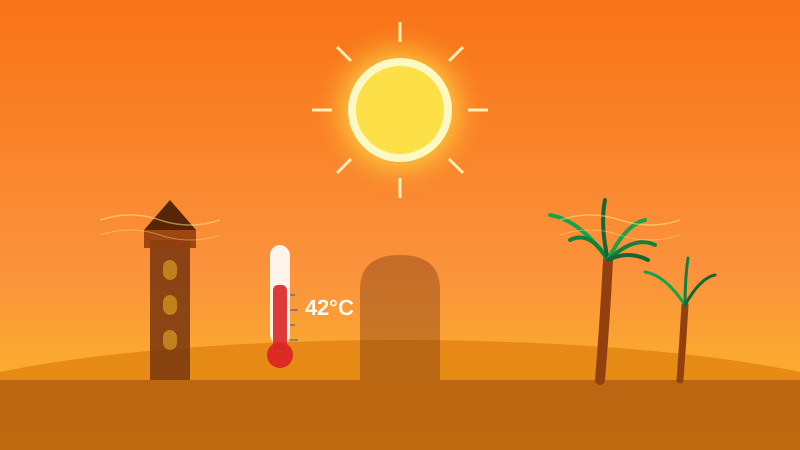
Summer in Morocco is a tale of two countries. While the Atlantic coast stays relatively mild — Essaouira's famous alizé winds cap temperatures at a breezy 24 °C — the inland cities of Marrakech and Fès can sear past 42 °C. Understanding which Morocco you're visiting in July or August makes all the difference.
Meteorological summer in Morocco runs from June 21 to September 22. For practical purposes, July and August represent the peak: the hottest temperatures, the least rainfall, and the highest tourist activity on the coast.
Temperatures by Region
Morocco's geography creates dramatic regional contrasts. The High Atlas Mountains act as a thermal barrier, splitting the country into distinct climate zones.
Atlantic Coast: Mild and Breezy
Cities like Essaouira, Agadir, Casablanca and Rabat benefit from cool Atlantic air and the Canary Current offshore.
| City | July Avg Min | July Avg Max | August Avg Max |
|---|---|---|---|
| Essaouira | 17 °C | 24 °C | 24 °C |
| Agadir | 20 °C | 26 °C | 27 °C |
| Casablanca | 18 °C | 27 °C | 28 °C |
| Rabat | 18 °C | 30 °C | 31 °C |
Essaouira earns its nickname "the city of wind" — the alizé north-easterly blows almost daily in summer, making it the most comfortable coastal destination and a world-class kitesurfing and windsurfing spot.
Inland & Pre-Saharan: Extreme Heat
Move 100 km inland past the Atlas foothills and the climate changes completely. Hot, dry air masses from the Sahara dominate.
| City | July Avg Min | July Avg Max | August Avg Max |
|---|---|---|---|
| Marrakech | 23 °C | 41 °C | 40 °C |
| Fès | 21 °C | 40 °C | 39 °C |
| Oujda | 21 °C | 38 °C | 37 °C |
| Ouarzazate | 22 °C | 39 °C | 38 °C |
Marrakech regularly records temperatures above 45 °C during peak heatwave events in July and August. In 2024, Marrakech reached 49.6 °C — one of the highest temperatures ever recorded in the country. Always check the live forecast before planning activities.
Northern Coast: Warm but Humid
Tanger and Tétouan sit at Morocco's northern tip, influenced by the Mediterranean as well as the Atlantic. Summers are warm and more humid than the inland south.
- Tanger: July averages 19–29 °C, August 20–29 °C
- Tétouan: slightly warmer, 20–32 °C in peak summer
- Afternoon sea breeze regularly drops the felt temperature
The Deep South: Hot but Dry
Dakhla and Laâyoune in the Saharan south experience intense sun but are spared extreme Chergui heat events due to their coastal position.
- Dakhla: July averages 20–27 °C — comfortable enough to attract kite surfers year-round
- Laâyoune: July 21–30 °C — warm but not oppressive
July vs. August: Key Differences
| July | August | |
|---|---|---|
| Inland max temps | Typically 40–44 °C | Slightly lower: 38–42 °C |
| Rainfall | Near zero nationwide | Near zero, occasional Atlantic showers in the north |
| Chergui wind events | Most frequent | Less frequent |
| Sea temperatures | 21–22 °C (Atlantic) | 22–23 °C — warmest of the year |
| Tourism | High season begins | Peak of Moroccan domestic holidays |
The Chergui is Morocco's notorious hot desert wind — a sirocco-type blast from the south-east that can push temperatures 6–10 °C above average for 24–48 hours. It mainly strikes inland cities and can reach the Atlantic coast during intense episodes. See our Chergui wind guide for full details.
Practical Tips for Summer in Morocco
Beat the Heat: Timing Your Day
- Best hours outdoors: 6–10 AM and after 6 PM
- Avoid: 11 AM–4 PM in inland cities — this is when streets empty and UV index reaches 11+
- Siesta culture: Most Moroccan shops and souks quiet down between 1–4 PM in summer — use this time to rest, not explore
Hydration
- Drink 3–4 litres of water per day when outdoors in inland cities
- Avoid iced drinks when overheated — room-temperature water is absorbed faster
- Fresh-squeezed orange juice (jus d'orange) is available everywhere for 10–15 MAD — an excellent source of electrolytes and hydration
Sun Protection
Morocco has among the highest UV index values in the Mediterranean. In July, Marrakech hits UV index 11 (Extreme). See our UV Index Guide for month-by-month data.
- Apply SPF 50+ before going outdoors and reapply every 90 minutes
- Wear a wide-brimmed hat and loose, light-coloured, long-sleeved clothing
- Sunglasses are essential — UV reflection off light-coloured stone surfaces is intense
Where to Stay Cool
- Coastal cities: Essaouira, Agadir and El Jadida are the most comfortable in summer — sea temperatures reach 22 °C in August
- Mountain retreats: Ifrane (1,664 m) and Azrou in the Middle Atlas stay below 28 °C even in July
- Traditional riads with courtyards: The courtyard architecture of Moroccan riads creates natural cooling — thick walls maintain 22–24 °C indoors even during midday heat
City-by-City Summer Forecast Links
Check the live weather for your summer destination:
- Météo Marrakech — Inland, very hot, check before every outing
- Météo Agadir — Coastal, mild, best for families
- Météo Essaouira — Windiest, coolest, perfect for active holidays
- Météo Casablanca — Urban Atlantic coast, moderate
- Météo Tanger — Northern gateway, warm and lively
- Météo Fès — Imperial city, extremely hot — plan visits for early morning
What to Pack for a Summer Morocco Trip
| Item | Why |
|---|---|
| SPF 50+ sunscreen | UV index 10–11+ in June–August |
| Wide-brimmed hat | Essential for medina exploration |
| Light cotton or linen (light colours) | Heat reflection and breathability |
| Refillable water bottle | Refill often — 1 litre/hour in direct sun |
| Sandals + light sneakers | Cool feet; sneakers for evening medina walks |
| Light scarf/shawl | Covers shoulders for religious sites and sun protection |
For packing a complete summer kit, see our full Morocco Weather Packing Guide.
Conclusion
Morocco's summer is best enjoyed on the coast or at altitude. For those visiting inland cities like Marrakech and Fès, early morning is when these ancient medinas are at their magical best — cool, quiet, lit in golden light before the heat takes over. With the right timing, sun protection and hydration strategy, a summer trip to Morocco is absolutely rewarding.
Check your destination's live forecast on Météo Morocco Help and plan your day around the heat.