What to Wear in Morocco: The Complete Clothing Guide
Morocco spans snow-capped mountains, Atlantic fog, and inland plains where summer heat regularly passes 40 C. What works in Essaouira will cook you in Marrakech, and what works in Marrakech will freeze you in Ifrane. This guide breaks down what to wear by season and region, explains the traditional garments you will see everywhere, and shows you how to check a full outfit recommendation for your exact city, date and occasion with our What-to-Wear tool.
What to Wear by Season
The Atlantic Coast (Casablanca, Rabat, Essaouira, Agadir)
The ocean keeps coastal cities mild all year: daytime temperatures sit between 17 C and 26 C in most months. Light layers are the rule - a t-shirt or shirt for the day, a light jacket or cardigan for the evening breeze. Summers rarely exceed 30 C, but the marine layer can make mornings grey and humid. Essaouira is famously windy, so bring a windbreaker if you plan to kitesurf or walk the ramparts.
The Inland Plains (Marrakech, Fes, Meknes)
- Spring (March-May) and autumn (October-November): the sweet spot. Daytime temperatures between 20 C and 28 C, cool evenings around 12 C. A light djellaba, a t-shirt and a cardigan cover almost everything.
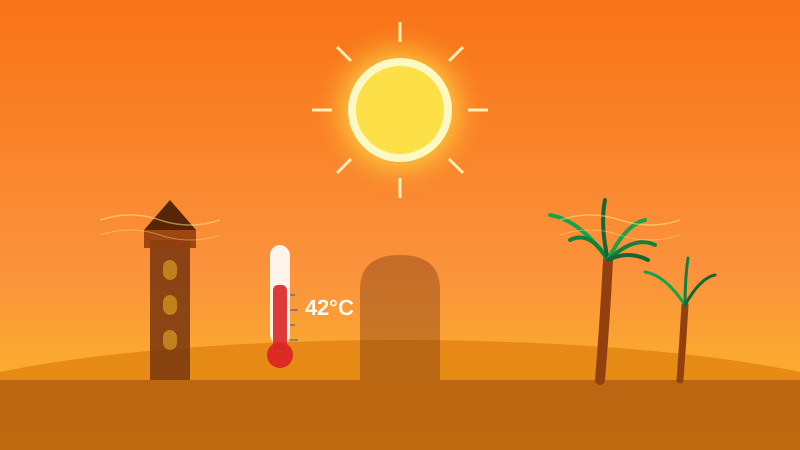
- Summer (June-August): punishing. Marrakech and Fes regularly exceed 38 C, sometimes 45 C during heatwaves. Loose, breathable fabrics in cotton or linen, a hat, sunglasses and sunscreen are non-negotiable between 12:00 and 16:00.
- Winter (December-February): pleasant days near 18 C but cold nights that can drop to 5 C. Moroccan buildings are built for heat, not cold - pack warm layers for evenings, a wool djellaba does the job beautifully.
The Atlas and the Mountains (Ifrane, Azrou, Midelt)
Snow is common from November to March, and Ifrane holds the national cold record. If you visit in winter, bring a padded jacket (doudoune), a burnous if you can find one, a beanie, gloves and proper boots. In summer, mountain valleys stay comfortably warm by day and refreshingly cold at night - again, layers.
The South and the Sahara (Ouarzazate, Zagora, Merzouga)
Desert logic applies: very hot days, very cold nights, almost no rain. In summer, cover up rather than strip down - loose long sleeves in light colors protect better than bare skin under the Saharan sun. The traditional rezza turban, still worn in the south, is genuinely the best sun protection you can find.
Moroccan Traditional Clothing Explained
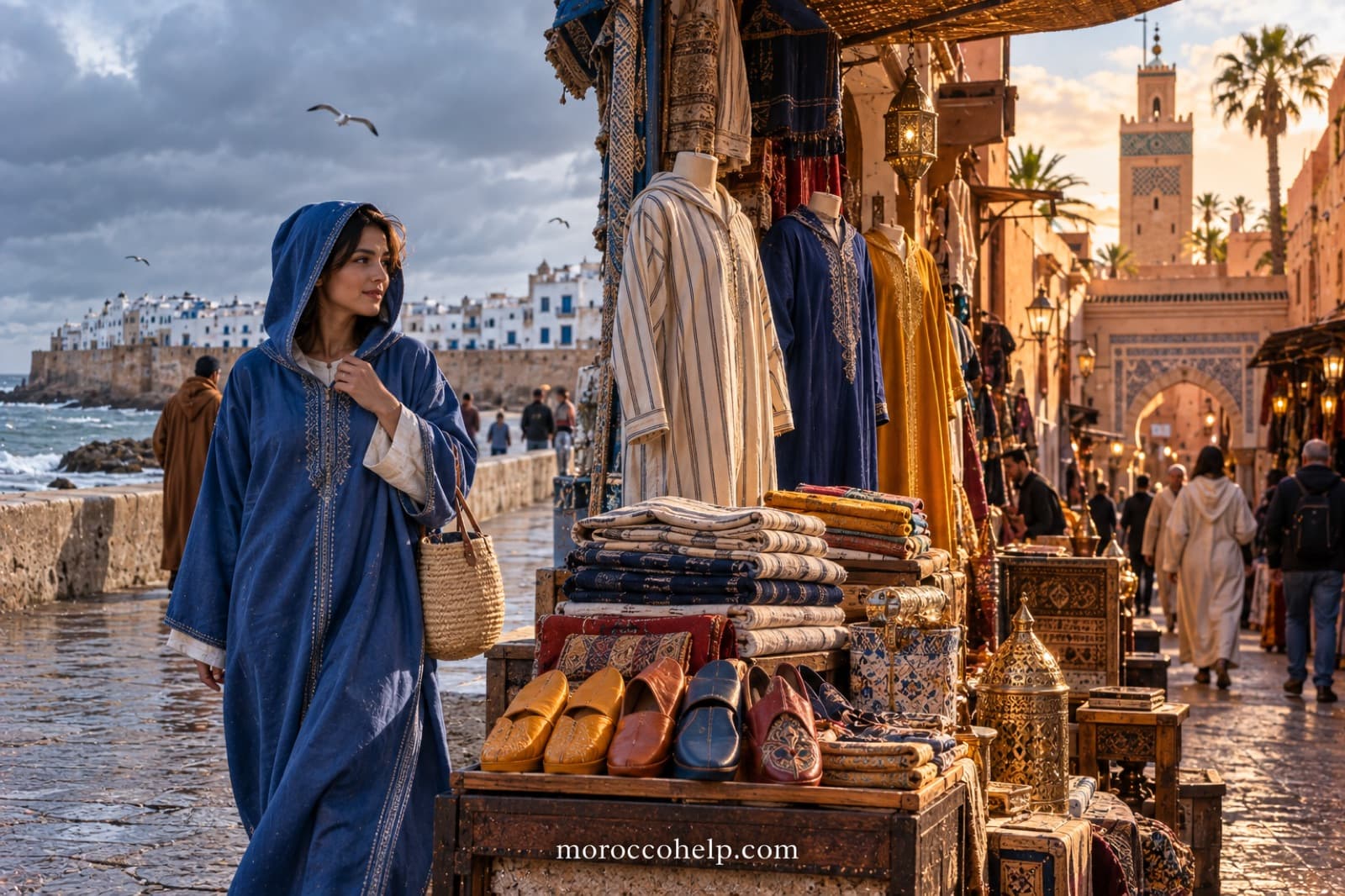
- Djellaba (جلابة): the everyday garment for Moroccan men and women - a loose, hooded robe in light cotton for summer and wool for winter. Visitors can absolutely wear one; in the souks you will be complimented, not stared at.
- Gandoura (قندورة): the djellaba's sleeveless, lighter cousin, perfect for hot days and for lounging at home.
- Caftan (قفطان): an elegant, embroidered robe worn by women at celebrations. A takchita is the two-piece ceremonial version, closed with the mdamma belt.
- Jabador (جابادور): a two-piece set of tunic and trousers worn by men, common at family gatherings and religious holidays.
- Babouche or belgha (بلغة): the traditional leather slipper. Soft, cheap and perfectly adapted to medina streets.
- Burnous (برنس): a heavy wool cloak with a hood, still the warmest winter garment in the Atlas.
- Chechia (شاشية): the flat wool cap worn by men, and the rezza, a saharian turban.
Moroccan Clothing Region by Region
From the blue alleys of Chefchaouen to the dunes of the Sahara, every region has its signature garment. Swipe through the gallery to recognize them all.
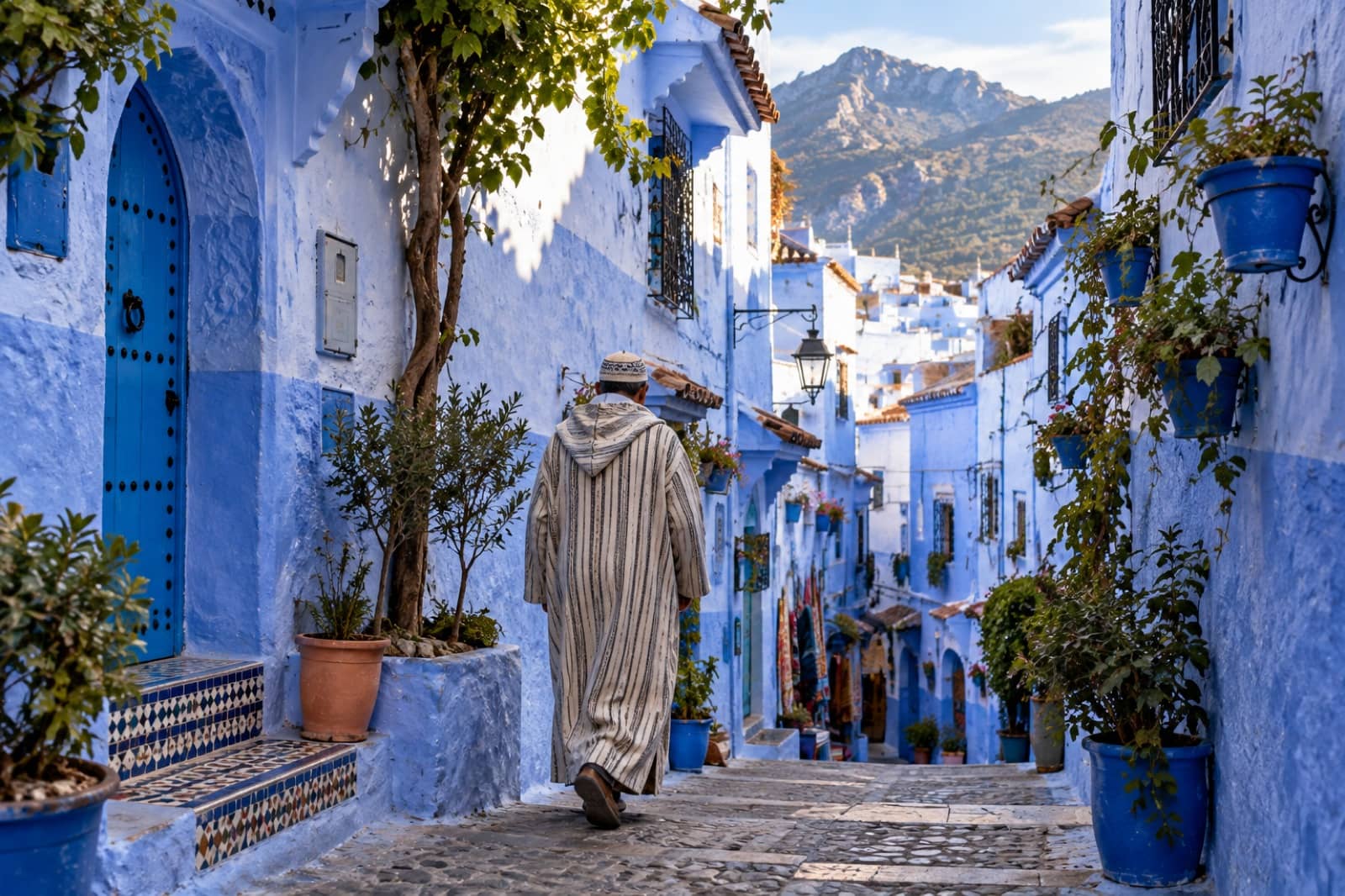 North · Chefchaouen
Djellaba
The loose hooded robe worn everywhere in Morocco, light cotton for summer and wool for winter.
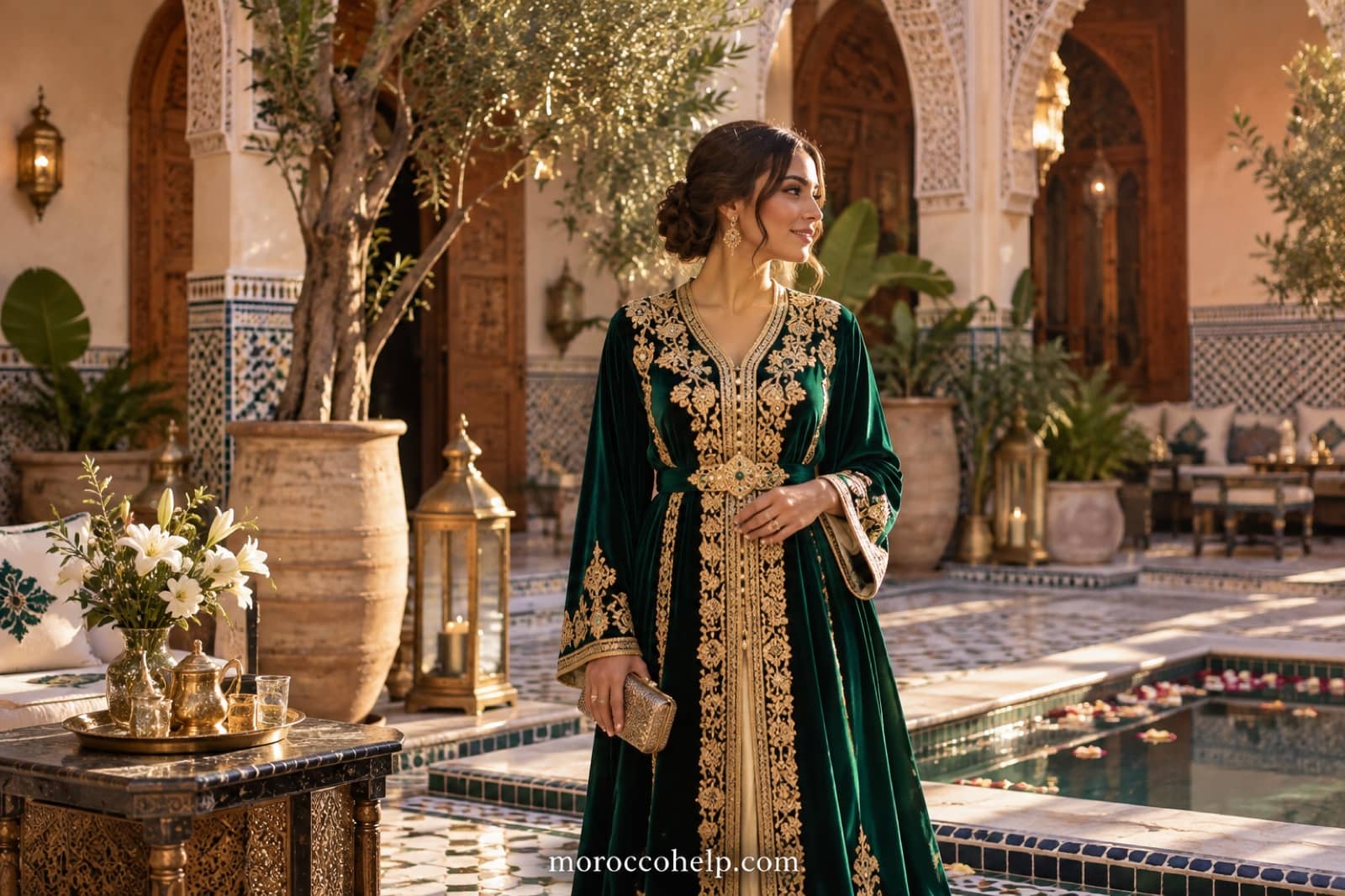 Fez · Marrakech
Caftan
Ceremonial embroidered robe with gold sfifa trim, the centerpiece of weddings and celebrations.
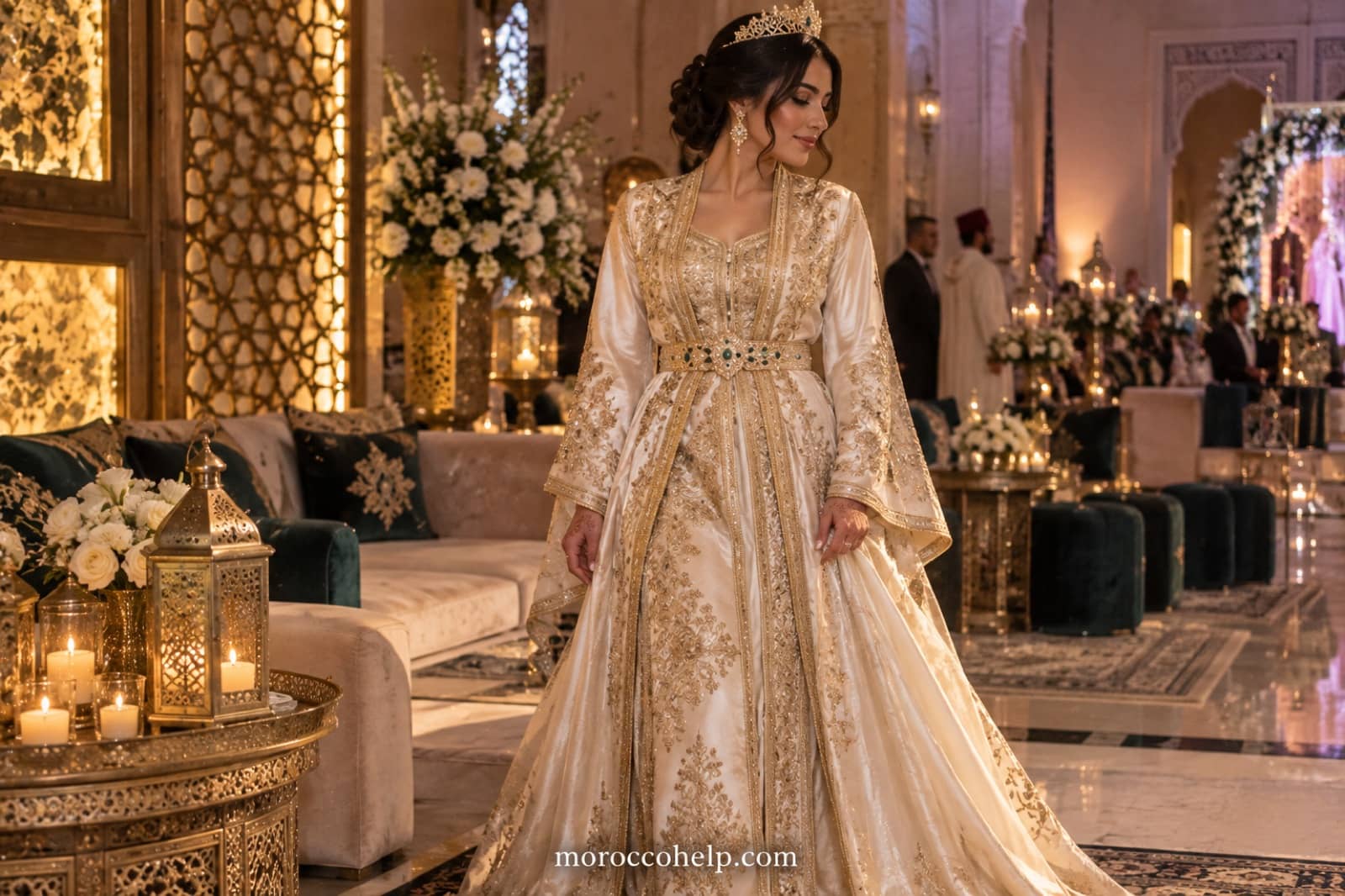 Ceremonies
Takchita
Two-piece festive outfit closed with the mdamma belt, reserved for grand occasions.
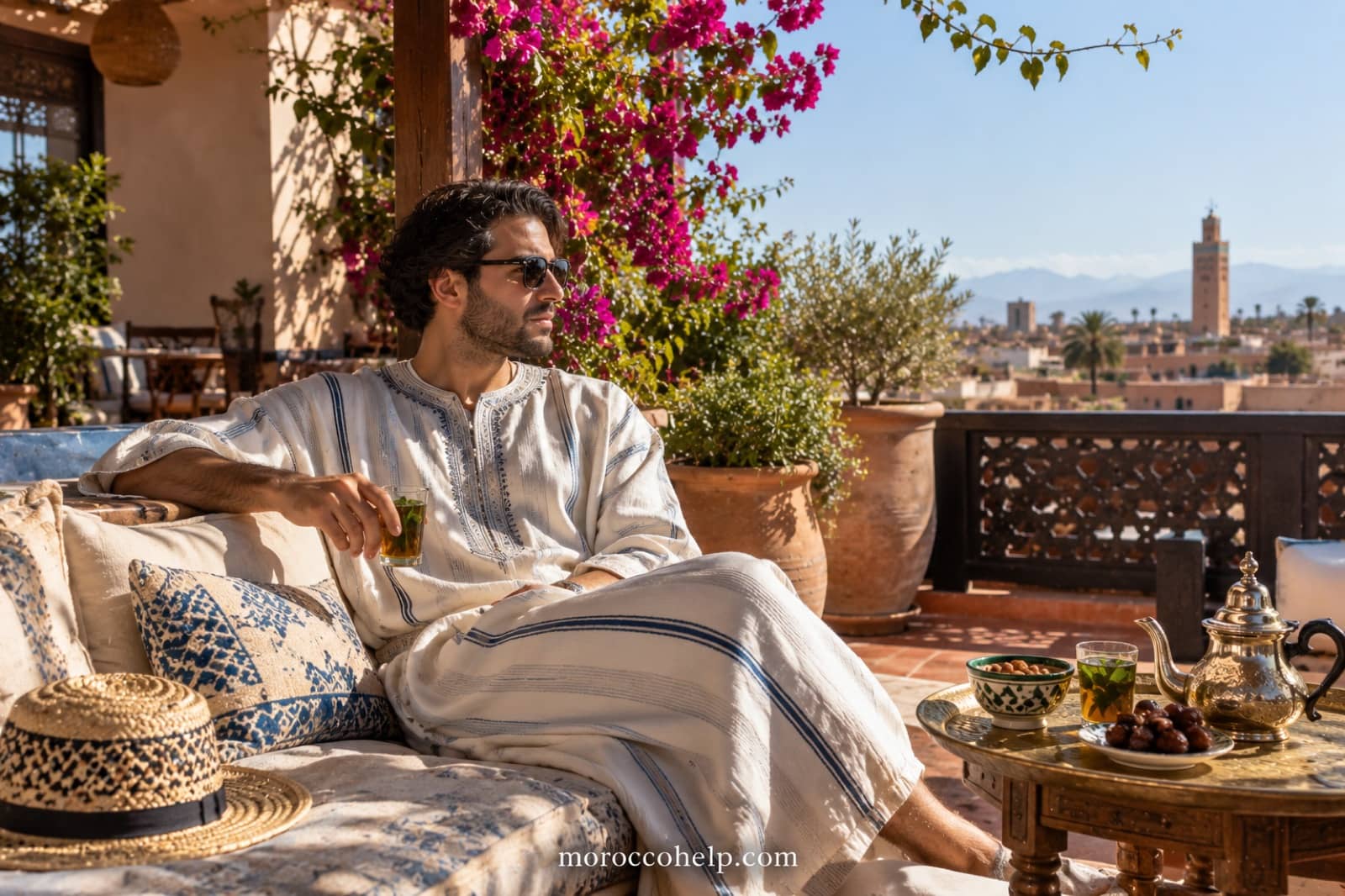 Inland plains
Gandoura
Light hoodless robe, the coolest option for very hot days.
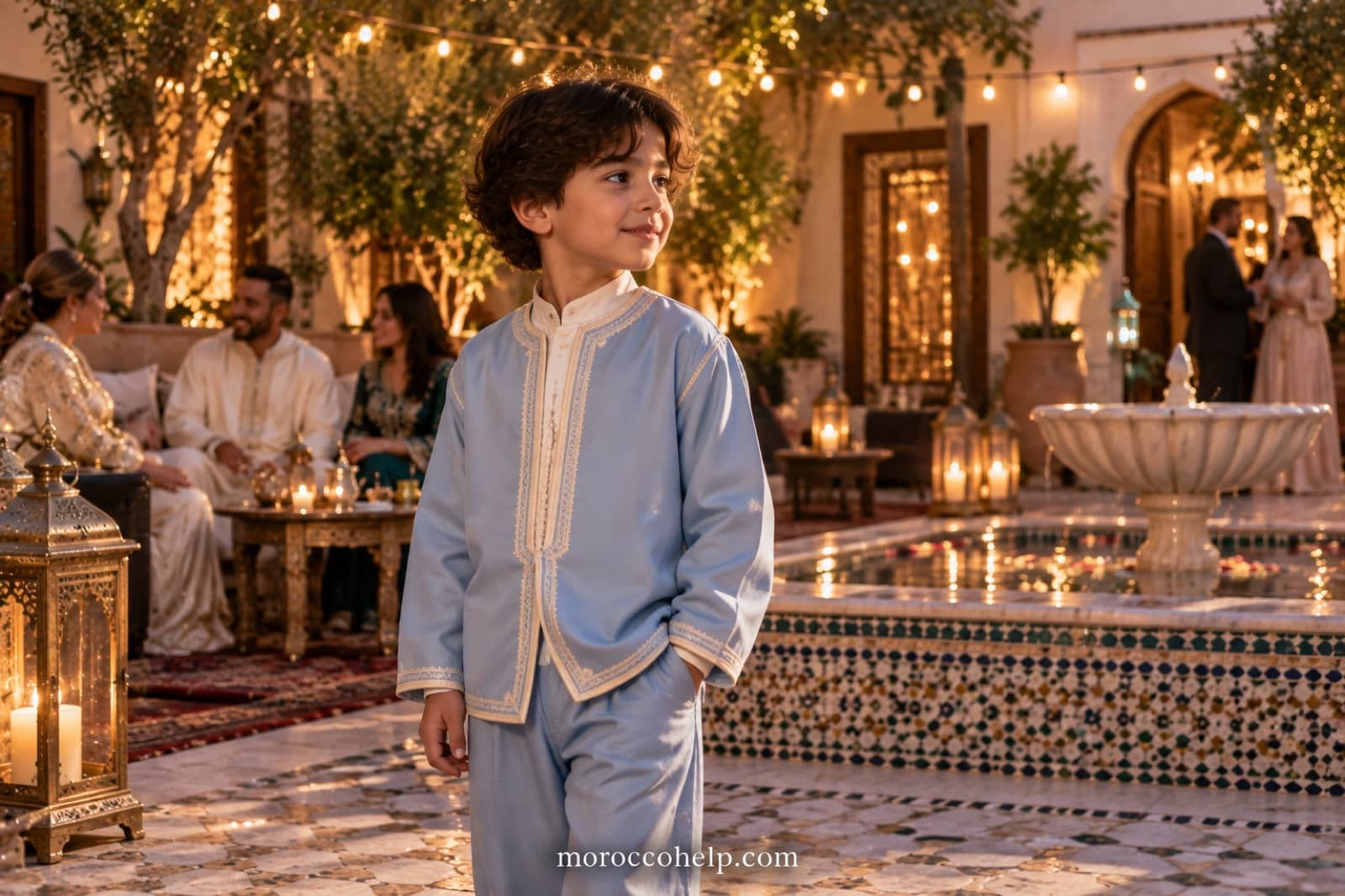 Family gatherings
Jabador
Tunic-and-trousers set for men and boys, a staple of Eid and family gatherings.
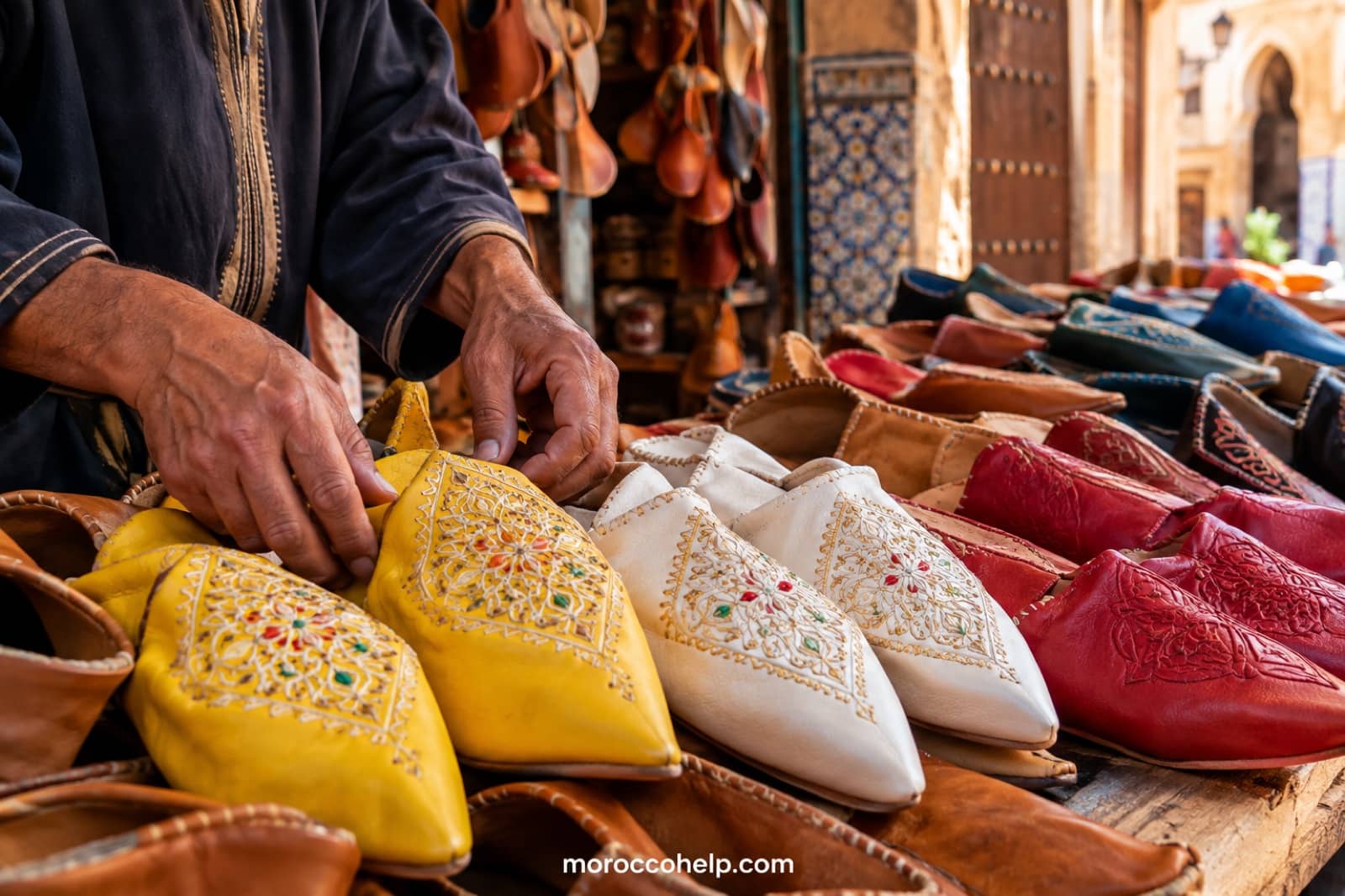 Fez · souks
Babouche (belgha)
The traditional leather slipper, soft and perfectly suited to medina alleys.
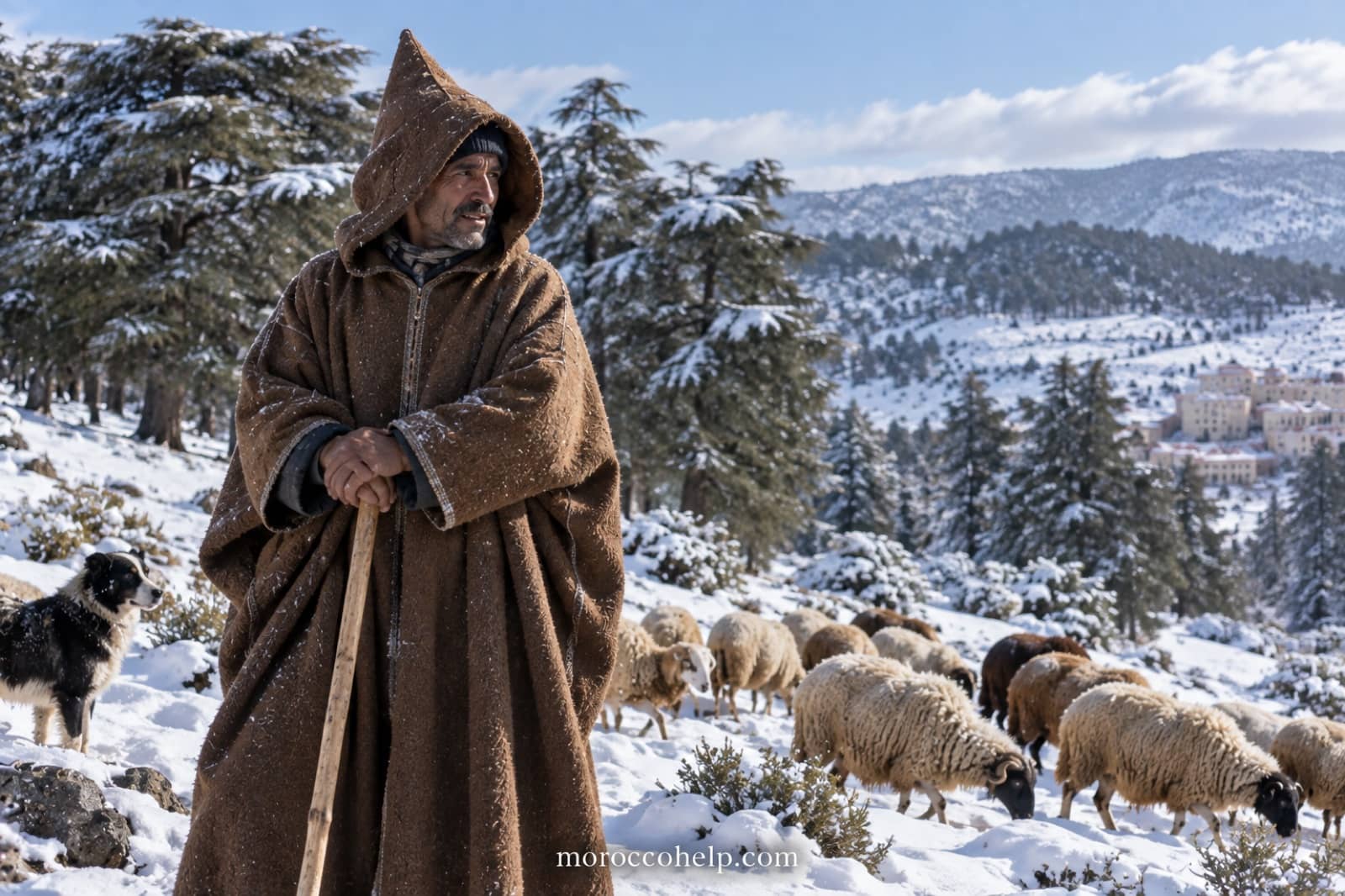 Atlas · Ifrane
Burnous
Hooded wool cloak, the warmest winter garment of the mountain regions.
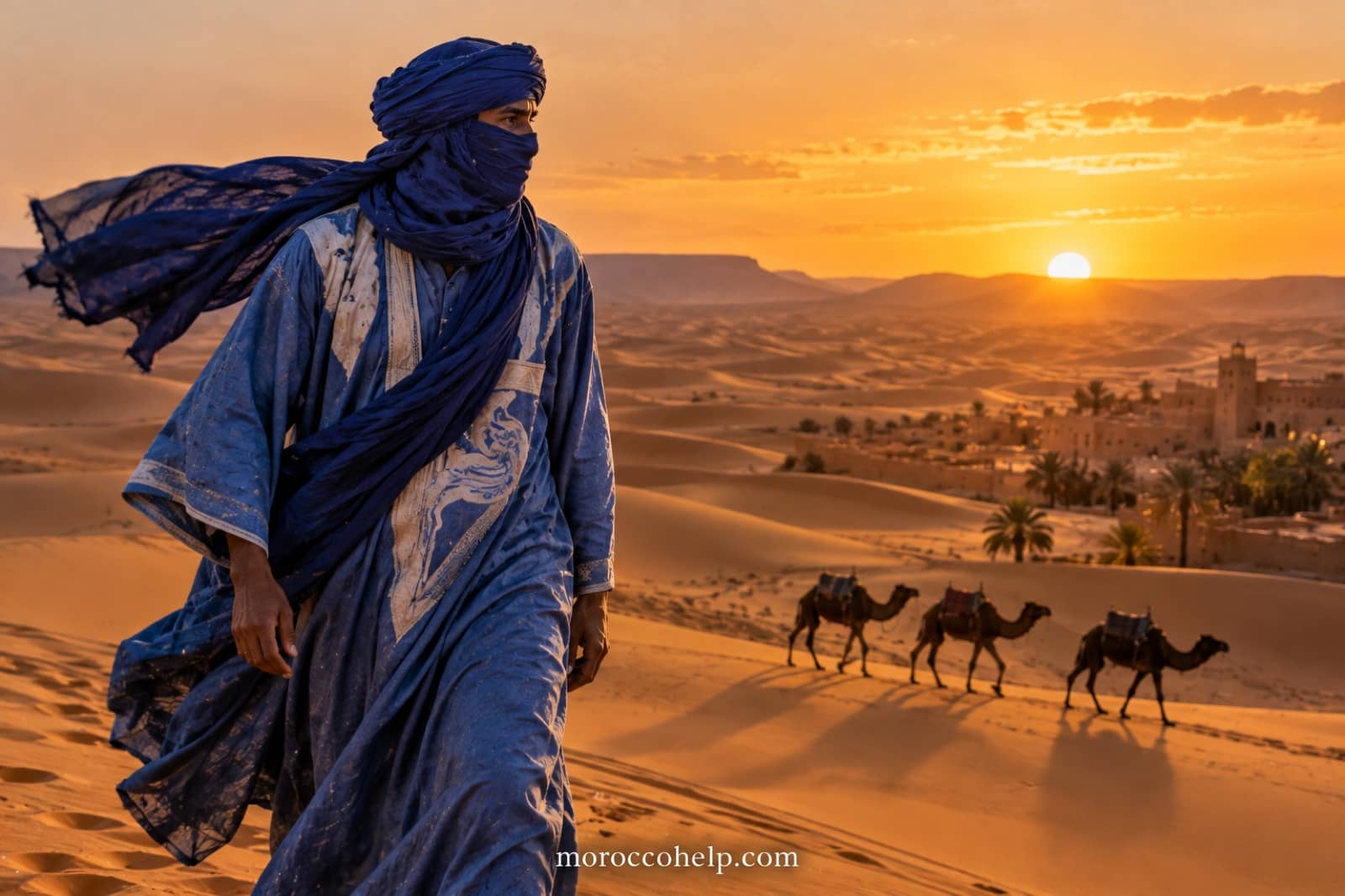 South · Sahara
Rezza turban
The Saharan turban, the best possible sun protection under the desert sun.
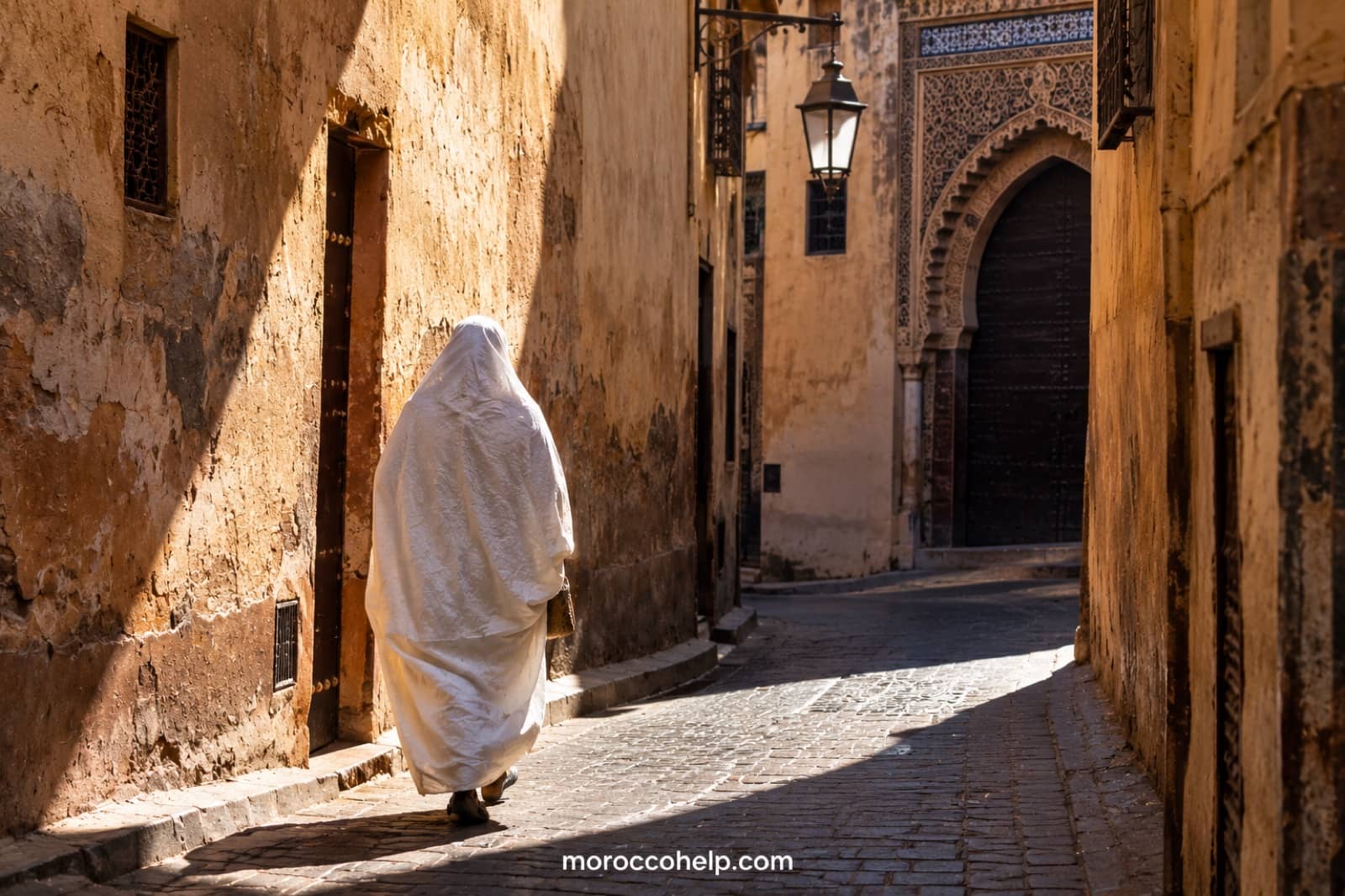 Fez · medina
Haïk
The draped white cotton wrap traditionally worn by women of the imperial cities.
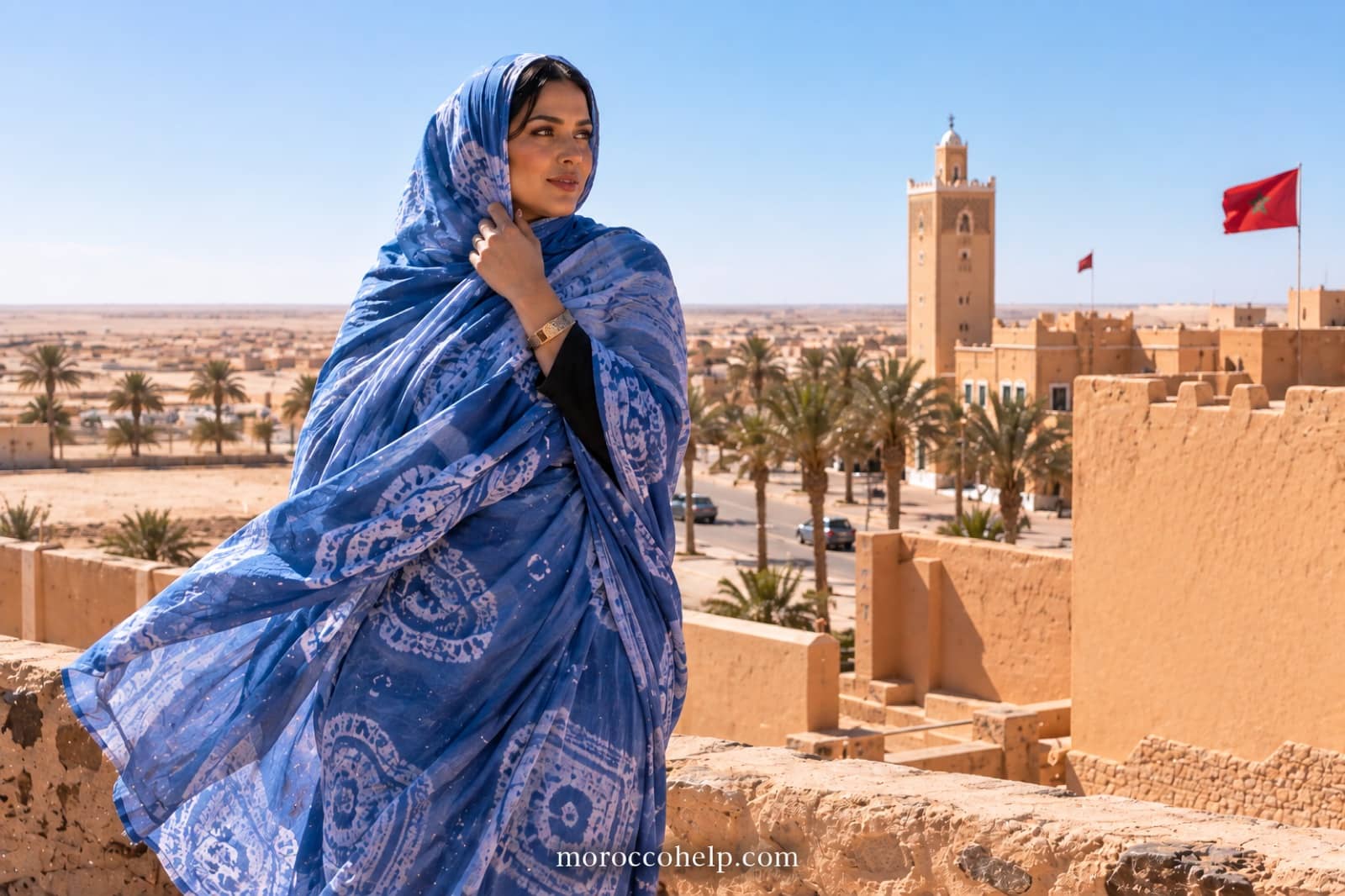 South · Laayoune
Melhfa
The flowing draped fabric of Moroccan Saharan women, light yet covering.
Our What-to-Wear tool recommends these traditional garments alongside modern basics, with names in Arabic, French and English, so you can recognize them in the shops.
Dress Codes and Occasions
There is no strict dress code in Morocco, but modest clothing is appreciated, especially in medinas and rural areas. Shoulders and knees covered is the polite baseline for both men and women. For specific occasions:
- Mosque visits: cover shoulders and knees, women bring a scarf, and everyone removes shoes at the entrance.
- Office and business: a shirt and trousers for men, a chemisier or blouse with trousers or a skirt for women. A blazer for meetings.
- Ceremonies and weddings: this is caftan and takchita territory for women, jabador or a fine djellaba for men.
- Beach and pool: swimwear is fine on the beach and at hotel pools, but cover up when you leave.
- Family visits and everyday errands: casual and modest - think jeans, long skirts, t-shirts, or a light djellaba.
Check Your Outfit Before You Go
Today in Marrakech
Heavy Rain · 20° - 37°
Recommended right now
- Light djellaba
- Gandoura
- Babouche slippers
- Melhfa
- T-shirt
- Tank top
Instead of guessing, check exactly what to wear for your destination and date. The tool reads the 16-day forecast for all 78 Moroccan cities in our network, matches temperature, rain probability, UV index and wind against a referential of Moroccan and everyday garments, and adapts to who the outfit is for - man, woman, boy or girl - and where you are going, from the office to the mosque to the beach. For dates beyond the forecast window, it switches to five-year climate averages, which makes it a reliable packing planner too. It is free, requires no sign-up, and works in Arabic, French and English.